Blind Spot
Château Margaux
Premier Grand Cru Classé Margaux Red Bordeaux Blend 1996

Tasted Blind. Maybe slightly lighter appearance than 1 , with ruby centre and lighter garnet rim . Slightly more floral in tone, touches of spice and elegant redder fruits . The most aromatic of all coming back to this . On the palate this has lovely red fruits , very precise with a juicier mouthfeel , velvety tannins and refreshing acidity . Long very well balanced finish, slightly saline hint. Long and very pretty . Tonight more aromatic , more joyful than all others , long and detailed , in a lovely place now and over the next 10-15 years. Margaux ? — 10 days ago
Shafer Vineyards
Hillside Select Stags Leap District Cabernet Sauvignon 2003

2003 vintage. Opened and decanted without issues or concerns. Used a Durand to open and cork was in great shape. Tasted after 30 minutes. The usual light-medium body. Plenty of polish at the 20+ year marker with unanticipated, ruff splash of chunkiness on the finish. Approx 4-5 years away from the absolute, top of the bell curve now but, given the pedigree, could possibly absorb that timescape another 5-spot and I wouldn't argue. Drink now or later. Either or. Ain't gonna disappoint unless you swing exclusively on Napa mountain fruit vines. 7.1.26. — 3 months ago

Château La Mission Haut-Brion
Pessac-Léognan Red Bordeaux Blend 1994
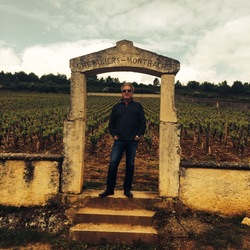
Classic La Mission nose that is in a perfect spot showing red & black fruits, cedar, leather, earth, graphite, spice box along with sweet tobacco — 4 months ago

Dalla Valle Vineyards
Napa Valley Cabernet Sauvignon 1990

Heidi and Bo Barrett wine dinner
Lazy Bear Restaurant
WINE
2024 La Sirena Muscat
2009 Montelena Chard
1994 Paradigm merlot
2019 La Sirena cab/syrah
1985 Montelena cab
2008 Montelena cab
1983 Buehler cab
1990 Dalla Valle cab
2015 Barrett & Barrett cab
20-year Montelena ruby port
FOOD
SF Bay halibut salad
Monterey spot prawns
Liberty duck
Morel au poivre
Coal roasted wagyu A5 ribeye
Dandelion chocolate — a year ago

Colgin Cellars
IX Estate Napa Valley Red Blend 2005
Open the Bottle night(last Sat of Feb.) and thought I would sacrifice this bottle tonight.
+1 hour decant(chunky/fine sediment). A fabulous dark purplish garnet color with little bricking. On the nose: Intoxicating savory perfumed notes of dark red fruit, forest floor, cigar ash, stewed meat, smoke, soil. Taste: dark cherry/plum, espresso, leather, dark chocolate and a smokey/spiced/earthy long dry finish. YUM! Some slightly kickin still there tannins, but in a good spot for me with time to go at 19 years. — 3 years ago
Ridge Vineyards
Monte Bello Vineyard Cabernet Sauvignon Blend 1991
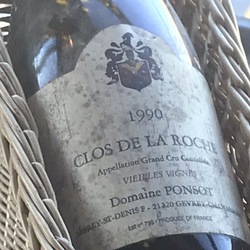
Taken to Ridge Vineyards to pair with their Library tasting. Deep scarlet color, almost opaque. Fragrant nose. Notes of blackberry, blueberry, tobacco, earth, saddle leather and some anise. Silky in the mouth like 70s valour. Awesome juice. Served a glass blind to a sr. staffer who guessed it as the 92. Well done sir. — 4 years ago
Château Latour
Premier Grand Cru Classé Pauillac Red Bordeaux Blend 1996
Tasted blind. Again medium deep ruby with medium wide garnet rim . Again slightly aloof , showing a touch of herbaceous blackcurrant , mineral and slate notes . Probably the most closed of all coming back . Quite deep and rich again , mineral , blackcurrant, wet stones . Muscular tannins and balanced acidity , deep with a slight herbaceous touch on the decent finish . Latour ? Compared with the rest this is slightly pedestrian, even though it is still an excellent wine it’s not as thrilling as its Pauillac stablemates Lafite or Mouton. Perhaps needs even more time , come back in 5 years and will last well a further 10 -15. — 10 days ago
Château Palmer
Margaux Red Bordeaux Blend 1983
Medium ruby garnet with quite wide garnet rim . Still quite youthful for age . Aromatic from the off, with red plum , cherry , hedgerow fruit , cigar box , scorched earth , dried flowers . On the palate this is medium bodied , with lots of herbal tinged red fruits , tobacco , grafite, with good volume. Perfectly balanced acidity and suave resolved tannins . Long tobacco edged , red fruit finish . Very detailed and aromatic, no need to decant , really pretty and in a lovely spot though don’t see this improving further, as after about 2 hours this particular bottle starts to fade a little , loosing its aroma and showing a touch of rain water and wet rock hints on the nose, and fading a little on the palate . Drink now and over the next 5 years or so to get the best of this . At Restaurante Fasano , Jardins , São Paulo — a month ago
Domaine Auguste Clape
Cornas Syrah 2005
Presented to me double-blind at Tasting Group. The wine pours a deep garnet/purple with an opaque core and some moderate rim variation; medium viscosity with moderate staining of the tears and some signs of sediment. On the nose, the wine is vinous with beautiful notes of ripe and slightly dried black and blue fruits: dark brambles, plum, fig, purple flowers, leather ball glove, something spicy and green that has me debating between rotundone or pyrazines (but which?), rocky earth and fine baking warm spices. On the palate, the wine is dry with medium+ tannin and medium+ acid. Alcohol is medium. Confirming the notes from the nose. The finish is long. What a beautifully made wine.
Initial conclusions: this could be Cabernet Sauvignon (or a blend with associated Bordeaux varieties), Cabernet Franc, Merlot (blended with associated Bordeaux varieties) or Syrah from France, the US or Australia. This is older; probably 20+ years of age based on the secondary characteristics or dried fruit and old leather. While the fruit plays a starring role here, the alcohol seems almost modest so I can’t place this in Australia or the US. The problem I’m having, are there pyrazines or rotundone? I don’t get a lot of black pepper or animale, or olive for that matter…so I’m leaning towards this being Bordeaux. Final conclusion: this is a Cabernet Sauvignon-based wine with a blend of Bordeaux varieties, from France, Bordeaux, Pulliac, from a classified growth, 2004. Whoa!!! 2005 Clape?! What a treat! I feel like I should have nailed this wine. Alas…I still have to get better at differentiating between pyrazines and rotundone with age. Drink now with a decant, through 2045+ — 3 months ago


Château Cos d'Estournel
Saint-Estèphe Red Bordeaux Blend 2005
Presented to me, double-blind. The wine pours a deep garnet color with an opaque core; medium viscosity with moderate staining of the tears, and some signs of light sediment. On the nose, the wine is vinous with a mix of ripe and desiccated, mostly dark fruits: cassis, black cherry, plum, mixed brambles, old leather, pipe tobacco, pencil shavings, and fine baking spices. On the palate, the wine is dry with medium+ tannin (that is mostly integrated) and medium+ acid. Confirming the notes from the nose. The finish is long.
Initial conclusions: this could be a Cabernet-based Bordeaux blend, Tempranillo (or based blend) or Grenache-based blend from France, Spain or the United States. I feel like this leans more towards its fruit than its structure, even though it is a fairly well balanced wine in both regards. As a result, I am calling this a Cabernet-based Bordeaux blend from the United States, California, Napa Valley, Howell Mountain from a producer like Dunn, 2006. Shiiiiiit. To be honest, I’m not terribly surprised since this is Cos and from a warm vintage no less. Drinking well now and should through 2050+. — 9 months ago
Krug
Brut Champagne Blend 1996
Presented double-blind. The wine appears straw in color with medium viscosity and, apparently, there lots of tiny bubbles so there are signs of gas, LOL. On the nose, the wine is developing with heady notes of ripe orchard fruit, red forest berries, marzipan, lemon curd, fresh brioche. On the palate, the wine is dry with high acidity. Confirming the notes from the nose. The finish lasts for an eternity. The texture is ever so creamy. Wow…well, I was drinking something special. Had to be Champagne. Maybe vintage? Maybe a tête de cuvée? The style was similar to Krug. Called Champagne from a producer like Krug. OMG…the 1996 Vintage Brut?! Sheesh…someone was feeling generous! Admitted, I don’t often get to drink vintage Krug (for many hundreds of reasons!) so my experience is obviously limited. However, there’s clearly no question in this being true to house style and, now that I know the vintage, this is showing why 1996 is so special. As others have noted, this is fresher than the 1995 I had some months ago (though, that was very special too) and had greater acid. I would like to think this provides a crystal ball for the 2008 vintage that is sure to follow a similar trajectory. Drinking very fine indeed, right now and should continue to do so through 2046…depending on how you like to drink your Champagne. — 2 years ago
Château Haut-Brion
Pessac-Léognan Red Bordeaux Blend 1996
Tasted Blind. Again very similar appearance with ruby centre still , slightly thinner garnet rim . Different on the nose and on the palate to the others . Sweeter more toasty notes , earthy also , tobacco touches , bonfire , fire side hints. On the palate this has a spicy note , with a mix of red and black fruits , that earthy fireside hint . Good tobacco tinged finish . Juicier tannins , and balanced acidity . Really poised and pretty , spiced fruits, perfectly balanced . Lovely to drink now , though will give another decade of enjoyment . Haut Brion ? — 10 days ago
Château Lafite Rothschild
Pauillac Red Bordeaux Blend 1996
Tasted blind. Deeper slightly brighter in colour, deeper ruby and a thinner garnet rim . Bit more closed and deeper in fruit , grafite , blackcurrants , wet stones , mineral . There is also a seaside , sea shore hint coming back to this . On the palate this has more volume than 1 , richer in style . More dusty and drier tannins , balanced acidity and good grafite tinged length . Mouton ? Lovely depth and expressiveness , exuberante, young still but with time really shows well. From now and over the next 10 -15 years. This was the Lafite , which surprised me , but still a beautiful wine. — 10 days ago
Beaulieu Vineyard
Private Reserve Georges de Latour Napa Valley Cabernet Sauvignon 2021
2021 vintage. Tasted via Coravin. So the deals definitely afoot in Napa (and elsewhere in CA) currently. This was light-medium/medium body. Not the biggest Cabernet footprint on the delicate palate. But wow...immediately engaging and intimate simultaneously. Having tasted the late 60's, some 70's, most of the 80's, and nearly all of the 90's-2010's vintages of this at some point...actually feel like this is the wine this property has always wanted to make since inception. It's pure, authentic, and pared to the bone. Zen-like. No fluff, no fat. Tasting a Cabernet like this reminds me (yet again) how bastardized things have truly gotten along CA Hwy 29. Picked up two 6-packs and we'll see how it does. Leaner and biting-playfully. So unlike nearly all Napa cabs these days so it comes across as a huge palate/Napa Cab market reset now. Have been able to take or leave BV over the decades compared to Phelps, Stag's Leap Wine Cellars, Dunn, Diamond Creek, Mondavi, Mayacamas, Heitz and the rest of the really old guard but blind taste this against any 2020 or newer Napa Cab and/or Bordeaux and see where it slots for you. 8.5.26. — 2 months ago
Château Ducru-Beaucaillou
Saint-Julien Red Bordeaux Blend 1988
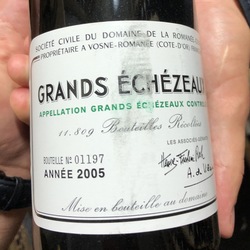
The cool 88 vintage is in a great spot—gamey and savory, a perfect food wine, particularly with the aged duck! — 7 months ago
Château Pichon-Longueville Baron
Baron de Pichon-Longueville Pauillac Red Bordeaux Blend 1990
Presented to me double-blind. The wine pours a deep garnet with an opaque core and some rim variation; medium viscosity with moderate staining of the tears and signs of sediment. On the nose the wine is vinous with notes of cassis, blackberry, black plum, tobacco, menthol, leather, and mix of cool and warm spices. On the palate the wine is dry with medium+ tannin and medium+ acid. Confirming the notes from the nose. The finish is long. This is really delicious.
Initial conclusions: this could be a Cabernet Sauvignon based blend or other Bordeaux-styled blend or a Tempranillo based blend from the United States, France or Spain. This saw French oak so I eliminated Spain. I thought the fruit was outshining the structure…so I liked the USA over France. And, based off the appearance, I thought this probably had 30+ years of age. Final conclusion: this is a Cabernet Sauvignon based blend from the United States, from California, Napa, Rutherford; 1994. Ugh…the 1990 vintage in Bordeaux has bit me twice now recently. Really awesome stuff! Drink now through 2040+. — 8 months ago
Silver Oak
Napa Valley Cabernet Sauvignon


Château Montrose
Saint-Estèphe Cabernet Sauvignon Blend 2012

The 2012 Montrose has a taut and focused bouquet with crisp blackberry, tobacco and light earthy scents on the nose. Fine vigour and class evident here. The palate is medium-bodied with chewy tannins on the entry, fine acidity, lightly spiced with a nicely proportioned and focused finish. This is a solid, almost swarthy Montrose, though it is surpassed by more recent vintages. Tasted twice at Bordeaux Index's Ten Year-On tasting and blind at the Southwold Ten-Year On tasting. (Neal Martin, Vinous, September 2022)
— 4 years ago
Andrew Cullimore
Tasted blind. Medium ruby garnet , medium garnet rim . Quite classic and elegant, with cigar box , grafite and some dried earth , some slightly toasty notes also . On the palate this shows good balance , fresh acidity , classic blackcurrant , cigar box , earthy touch . Good depth and length , grafite tinged finish , quite correct and no extra sweetness or weight . Good length and a spicy , mineral , blackcurrant tinged finish . Lafite ? Still young , really well balanced. From now and over the next 10 to 15 years. This was actually the Mouton , which was a great surprise, but certainly a pleasant one ! — 10 days ago