Cold Country Vines & Wines
La Cave du Vin Blanc de Morgex et de La Salle
Valée d'Aosta Prié Blanc 2020

I’m not sure where my previous note went.
Just when you thought you knew Italy, up pops this might as well be SwissFrench alpine darling from the Vallée D’Aoste.
Blanc de Morgex et de la salle. The town/village of Morgex lies just below Mt. Blanc. The Prié Blanc vines thrive in soil that has not known phylloxera.
Stones, herbs,and lemons all wrapped up in a rather electric pkg. I think drink young. Cold, the nose doesn’t have much to say past stone fruit, maybe rainier cherries.,But the palate is pow! Lemons, herbs, mineral, high acid and refreshing. With fried Branzino, perfect!
Always a sucker for high altitude Italian.
Thanks@ AstorWines — 3 years ago

Domaine du Pegau
Cuvée Réservé Châteauneuf-du-Pape Red Rhone Blend 2017



After going long on the 2016 vintage I only swooped up a couple bottles of the 2017 and this is my very first experience with the vintage. The Spring of 2017 presented all sorts of problems for Grenache vines in large parts of the Southern Rhône. A cold and wet May resulted in shatter which lead to yields that were anywhere between 30-60% less than normal. However, from June until harvest, the weather was beautifully suited for grapes; warm and dry. From my humble perspective, the results for Pegaü were nothing short of fantastic! After a few hours in the decanter, this was absolutely slaying the game with head spinning aromas of the purest dark bramble fruit, star anise, sandalwood and “Himalayan Spice” incense. On the palate, this was a concentrated best. Dark and red brambles, seeds and all, with black licorice, black pepper and some bacon fat. Huge tannin and fantastic acid. Long finish that’s lasting for minutes and killer pairing with rack of lamb. I find this to be a tremendous follow up to the 2016 and worthy of any high praise it receives. Probably should have bought more...maybe I can still snag some. The 2017 vintage ended up as a blend of 80% Grenache, 6% Syrah, 4% Mourvèdre and 10% mix of the other 13 approved grapes. As a side note, no “Cuvee da Capo” was made in 2017. — 6 years ago
Launois Père et Fils
Veuve Clémence Grand Cru Champagne Chardonnay
Micro-bubbles galore, Yum! This might be close second for a Friday evening standard for @David T but tonight it is flowing into glasses on the complete opposite side of the Country. A wonderful Blanc de Blanc Champagne.
Nose has freshly scrubbed lemon, grapefruit peel, sliced Granny Smith apple, wet chalk, cold brioche and Gardenia blossom in a breeze.
Palate is fresh orange peel, grapefruit peel (like really wow), tart green apple, fresh walnut, crunchy brioche with a little hint of sweetened butter and a splash of acidic ocean water.
Finish is intense, yet elegant and lasting for many minutes. We are quite looking forward the the evolution of this bottle across the evening, as it warms from 46°F and gains air time.
Thank you @David T @Sofia Jalilie for allowing us into your week closing tradition. The next bottle should have us closer together. — 7 years ago

Domaine Lafage
Centenaire Côtes du Roussillon Grenache Blanc Blend 2015

Lovely French white blend. Grenache Blanc, Grenache Gris and Roussanne blend together beautifully. Fruit from 100 year old vines. Lucious on the palette. Lovely straw color. Ripe stone fruit, honeysuckle, a hint of limestone. It's a beautiful wine. Better when it's closer to room temp rather than straight from fridge cold. The flavors really come out in the glass. WA rated 90-92. Try to find this one and buy multiple bottles. After our first bottle, was really glad I had several more! — 8 years ago
Château Lafite Rothschild
Carruades de Lafite Pauillac Red Bordeaux Blend 2003
On the nose, ripe; blackberries, sweet & sour dark cherries, cooked cherries & strawberries & hues of blueberries. Black tea, cola, soft baking spices; vanilla, light clove & cinnamon. Crushed rocks, stones, limestone, turned, moist black earth, tobacco leaf, saddle-wood, soft leather, dry & fresh dark red florals.
The body is medium edging toward full. The tannins pretty well resolved. The ripe fruits show the hot, ripe vintage. Blackberries, sweet & sour dark cherries, cooked cherries & strawberries & hues of blueberries black tea, cola, soft baking spices; vanilla, light clove & cinnamon. Crushed rocks, stones, limestone, tobacco with ash, some graphite, soft medium dark spice, turned, forest floor, powdery but edgy minerals, saddle-wood, soft leather, dry & fresh dark red florals with some violets on the finish.
This showed better with Ribeye. The Ribeye brought out a fuller, richer wine with even more complexity. 9.35-9.4 with the Ribeye. It just missed 9.2 on its own. It’s big brother the 03 “Lafite” is 💯 point Parker wine.
Photos of; Chateau Lafite, their oak vat fermenters, Estate wine and their magnificent barrel room.
Interesting history and producers notes...Lafite Rothschild has a long and interesting history dating back to 1234, even though the property was not in the Bordeaux wine business at that time.
It is has been largely believed that vines were already planted on their terroir. The owner of the estate at the time, Gombaud de Lafite left his mark, his name. Almost 1,000 years after he owned it, the Chateau is still named after him! The vines were probably in existence at Lafite for over a century, it was not until around 1680, the majority of vineyards of what we know of as Lafite Rothschild today were created. This is because on the 1680 estate manifest, there are six mentions of their Bordeaux vineyards. Jacques de Segur, earns credit for cultivating the vineyard as I wrote in my Colon Segur post last weekend. In 1695, Alexandre de Segur married Marie-Therese de Clauzel, heiress to Chateau Latour. So to dovetail that write up, within a generation, the Segur family married into two of the greatest Bordeaux vineyards, Chateau Lafite and Chateau Latour! When their son, Nicolas-Alexandre passed away, Chateau Lafite and Chateau Latour were separated.
In 1797, Chateau Lafite was sold again. In the deed of sale, Chateau Lafite was described as a Premier Cru of Medoc. This is one of the earliest mentions of what we know of today as Lafite Rothschild producing wines of what would later be classified as an 1855 First Growth.
At that time, of Lafite were managed by the Goudal family. The Goudal family were wine historians and were able to read accurate records and details of the viticulture and marketing plans for Chateau Lafite in the estates formative years. The Goudal family gets the credit for creating the cellar and saving many of the oldest bottles that remain in the cold, dark cellars, including their oldest bottle, the 1797 Lafite!
The start of the famous Rothschild family begins in 1744, with the birth of Amschel Meyer. Amschel Meyer began creating his fortune while working as a merchant at “Zum Roten Schild,” which eventually became the family name of Rothschild.
In 1798 his sons were sent to various cities to create their fortunes. Needless to say, his sons all prospered as did their children in turn. This eventually led to them wanting to own a Chateau in Bordeaux. So in 1853, Baron Nathaniel de Rothschild, an English member of the Rothschild family, purchased Chateau Brane-Mouton. As was the custom of the day, the new owner renamed it using his name and Chateau Mouton Rothschild was born.
This was followed in 1868, when James Rothschild, another member of the family purchased Chateau Lafite, which was now a coveted First Growth.
On 8 August, 1868, Baron James d’Rothschild purchased Chateau Lafite, which was sold at a public auction in Paris. It’s assumed, he bought the property for family competitive reasons looking to one up his brother, the owner of Mouton Rothschild. At that time, Mouton Rothschild was only a Second Growth at the time. But, that does not paint the entire picture. The 1855 Classification had not taken on the importance associated with it the we see it today. Plus, buying Lafite was a reasonable investment as the vineyard sold for about 8 times its earning potential.
The actual Chateau is one of the older structures in Bordeaux, as part of the building dates back to the later part of the 16th century. In 1868, the vineyard took up 135 hectares, of which 74 hectares were cultivated with vines. Production was much smaller in those days than it is today as it was between 4,000 and 5,000 cases.
Just three months after the purchase, Baron James d’Rothschild passed away and Chateau Lafite Rothschild became the joint property of his three sons; Alphonse Rothschild, Gustave Rothschild & Edmond Rothschild. Since 1868, Chateau Lafite Rothschild has remained in the hands of the of Rothschild family. The new owners renamed the estate Chateau Lafite Rothschild.
Jumping ahead to the modern age, in 1962, the Rothschild family added to their holdings when they purchased Chateau Duhart-Milon, a Fourth Growth vineyard also located in Pauillac. It was owned by the Casteja family for more than a century, Chateau Duhart Milon suffered from neglect and was in a awful condition. By the time Duhart Milon was obtained by the Rothschild family, the vineyard was down to only 17 hectare which required extensive renovations.
Baron Eric Rothschild, nephew of Baron Elie Rothschild, took over the management of Lafite Rothschild in 1974. Baron Eric Rothschild was part of the fifth Rothschild generation to inherit Chateau Lafite Rothschild. In 1984, the Rothschild family added to their holdings in Bordeaux with the purchase of Chateau Rieussec in Sauternes.
1987 was a difficult vintage, but because that was the year Lafite celebrated the inauguration of their wine new cellar, they had a lot to be excited about.
The new cellars were built under the supervision of Catalan architect Ricartdo Bofill, is both underground and circular, with a vault supported by 16 columns, giving the structure a majestic architectural style. The cellar holds 2,200 barrels, which is about 55,000 cases of wine. The construction took two years to finish and was completed in 1988.
Domaines Baron Rothschild became one of the first Bordeaux properties to invest in South America when they purchased Vina Los Vascos from a Chilean family. The owners of Lafite Rothschild continued expanding their holdings with the purchase of Chateau lEvangile in Pomerol from the Ducasse family, who owned the property for almost 100 years.
The wine making at Chateau Lafite Rothschild was managed by Charles Chevallier, who began his position in 1994. Charles Chevallier was replaced by Eric Kohler in January 2016. 2017 saw another change at the estate when Jean Guillaume Prats replaced Christopher Salin as the President of Domaines Baron Rothschild.
Perhaps, it’s the most refined of the First Growth. The wine, like all First Growth’s takes decades to mature. It has remarkable staying powers. Bottles of 1870 Lafite Rothschild discovered in the Glamis castle remain profound at more than 140 years of age! It is consider by many Master Sommeliers to be the best wine in the world.
Chateau Lafite Rothschild is one of the earliest major Bordeaux estates to bottle their own wine. In 1890, they bottled a large portion of the wine and again in 1906. Part of the estate bottling was due to requests from Negociants who were willing to pay more for Chateau bottled wines. Also, bottling was primarily done to combat piracy. At the time, it was known that merchants in some countries, like Russia were bottling cheap wine and placing labels from Lafite Rothschild on the bottles. The Koch’s famous Jefferson bottles were not the first attempt at counterfeiting.
Prior to 1996, some would say the property had its share of ups and downs. The 1960’s and 1970’s were not great for Chateau Lafite Rothschild. But since 1996, Lafite Rothschild has been producing some of the best wine in their history!
Sadly, only the wealthy can afford to purchase it. Price aside, there is no denying the level of quality. In 2003 Lafite Rothschild produced a wine that is possibly unequaled by the estate at any time in their long history. Hence, my purchase of their 03 second wine. 2009, 2010 and 2016 are not far behind.
Starting in about 2008, Lafite Rothschild became the most collectible wine from Bordeaux. Prices exploded due to demand from China as Chinese businessmen bought them as gifts or bribes depending on you look at it.
The reason this started was Lafite Rothschild paid for product placement on the number one rated Chinese soap opera on television. Characters in that show were pictured enjoying life with Lafite Rothschild and since then demand went through the roof as did priced.
However, Issac Newton had it right when he declared “What goes up, must come down.” Prices for Lafite Rothschild plummeted after 2011. By the difficult 2013, prices were finally starting to hold firm, but many of the vintages that were setting price records on a daily basis had lost close to 50% of their value.
Starting with the 2012 vintage, Chateau Lafite Rothschild began instituting anti-counterfeiting measures. From 2012 forward, to help fight, rampant counterfeiting, the estate places a seal of authenticity on the capsules of both Lafite Rothschild and Carruades de Lafite. The seal features a unique, numbered code that can be checked on their website, to verify if the wine is real.
The 112 hectare vineyard of Chateau Lafite Rothschild is planted to 70% Cabernet Sauvignon, 25% Merlot, 3% Cabernet Franc and 2% Petit Verdot. This shows a slight change in the vineyard.
While Cabernet Sauvignon remained at 70%, today there is slightly more Merlot, less Cabernet Franc and the Petit Verdot has been added since the mid 1990’s.
Located in the far north of the Pauillac appellation, only the small, Jalle de Breuil stream separates the vineyards from St. Estephe. You could divide the vineyards of Chateau Lafite Rothschild into three sections with 100 separate parcels in all. The estate has close to 50 hectares of vines located close to the Chateau, on both sides of the D2, which offers gentle rises in elevations of up to 27 meters. They also have about 50 hectares vines planted on the plateau in the Carruades sector, where they have two blocks of vines, one of which is inside the vineyard of Chateau Mouton Rothschild. It is interesting to note that even though the parcels in the Carruades sector give their name to the second wine of the estate, those vines are almost always placed in the Grand Vin.
There are also vines adjacent to, and interspersed with the vineyards of Chateau Duhart Milon. The property also consists of a smaller, 4.5 hectare parcel of vines located in the Saint Estephe appellation, “La Caillava”. The vines in St. Estephe are situated not that far from Cos d Estournel, which are located on a larger a parcel known as Blanquet. The vines in Saint Estephe are allowed to be placed into the wine of Chateau Lafite Rothschild because those vines were used to produce Lafite in 1885, at the time of the classification. The vineyards are close to their famous neighbor Mouton Rothschild.
Located just south of the Chateau, the best terroir of Lafite Rothschild has a thick layer of gravel with sand, clay, marl and limestone in the soils with rolling, gravel slopes. The gravel can be as deep as 4 meters in some parcels.
It is important to note that even though their vineyards are in the far north of Pauillac, most of the soil is pure gravel, rocks and stones. With more than 50% of the soil consisting of gravel, that is a large part of the reason Lafite Rothschild has such elegant, feminine textures and that coveted sensation of minerality.
On average, the vines are close to 40 years of age. However, Chateau Lafite Rothschild has much older vines. In fact, they have some vines that are more than 100 years of age planted in the La Graviere section. That small parcel of Merlot vines dates back to 1886. Less than 1% of the vines are that old.
Additionally, they have a small section of Cabernet Sauvignon that dates back to 1922! Other old vines range from 50 to 90 years of age! They also maintain some of the oldest Petit Verdot vines in the Medoc that was planted in the early 1930’s.
At Chateau Lafite Rothschild, between 1% to 1.5% of the vineyard is replanted every year. Vines less than 20 years of age are never included in the Grand Vin.
The vineyard of Chateau Lafite Rothschild is planted to a vine density that ranges from 7,500 to 8,500 vines per hectare. Only organic fertilizers are used in the vineyards of Lafite Rothschild.
During harvest, the goal is not to pick at the maximum level of ripeness. Instead, they are seeking a blend of grapes at differing levels of maturity, which gives the wine its unique textures, freshness, aromatic complexities and elegant sensations.
Lafite Rothschild is the largest of the First Growth vineyards with close to 112 hectares of vines. A large portion of the estate is taken up with stunningly, beautiful landscaping, lakes, trees and parkland.
At one point in time, Chateau Lafite Rothschild produced a dry white, Bordeaux wine that was sold as Vin de Chateau Lafite. The wine was produced from a large percentage of Semillon, blended with a small amount of Sauvignon Blanc. The last vintage for their white wine was 1960. The wine was sold as a generic AOC Bordeaux blanc with a simple, scripted label, black and white label.
Lafite vinification takes place in 66 vats that are a combination of 29 wood vats, 20 stainless steel tanks and 17 concrete vats that range in size from as small as 45 hectoliters up to 123 hectoliters in the concrete and as large as 270 hectoliters for the wood. The wide range of vat sizes coupled with different materials allow Chateau Lafite Rothschild to vinify depending on the needs of each specific parcel and grape variety. The stainless steel tanks and oak vats are used for Cabernet Sauvignon. The Merlot is vinified in the concrete tanks. Malolactic fermentation occurs in smaller, stainless steel tanks that vary in size from 25 hectoliters up to 60 hectoliters. At this point, Chateau Lafite Rothschild does not yet use gravity to move the fruit and juice in the cellar. It’s a good bet that a remodel is coming soon.
The average annual production of Chateau Lafite Rothschild ranges from 15,000 to 20,000 cases of wine per year, depending on the vintage. They of course make this second wine, Carruades de Lafite, which due to the name and association with the Grand Cru, has also become extremely collectible. Carruades de Lafite takes its name from a specific section of their vineyard that is located near Mouton Rothschild. Carruades is actually one of the older second wines in Bordeaux, as it was first produced in the mid 1850’s. About 100 years later during the mid 1960s, the estate reintroduced their second wine naming it Moulin de Carruades. The name was changed again in the 1980’s to Carruades de Lafite.
There is also a third wine which is sold as an AOC Pauillac that is produced from declassified fruit from Lafite Rothschild and Duhart-Milon.
The blend for Chateau Lafite Rothschild changes with each vintage depending on the character and quality of the vintage. Generally speaking, the amount of Cabernet Sauvignon in the blend ranges from 80% to 95%. Merlot is usually 5% to 20%. Cabernet Franc and Petit Verdot usually varies from 0 to 5%.
— 8 years ago

Domaine Etxegaraya
Irouléguy Tannat Cabernet Franc 2022

Vintage 2022 | 80% Cabernet Franc from 30 y old vines and 20% Tannat from 150 y old vines. The CF brings a lovely frivolousness, the T structure. Basque Country nearby the Spanish border. | paired with a deerburger and salad. — 2 years ago
Quails' Gate
Okanagan Valley Old Vines Foch 2020

A Marechal Foch from BC’s Okanagan Valley. Marechol Foch is a hybrid grape that is particularly resistant to cold which led to wide range planting in Canada. BUT generally as a cheap plonk wine to be made in quantity.
This winery here, however, is considered the one that has mastered Marechal Foch. And this wine is SO good. Big jammy blackberry flavour for days. — 4 years ago

La Rioja Alta
Reserva Viña Ardanza Rioja Tempranillo Garnacha 2012
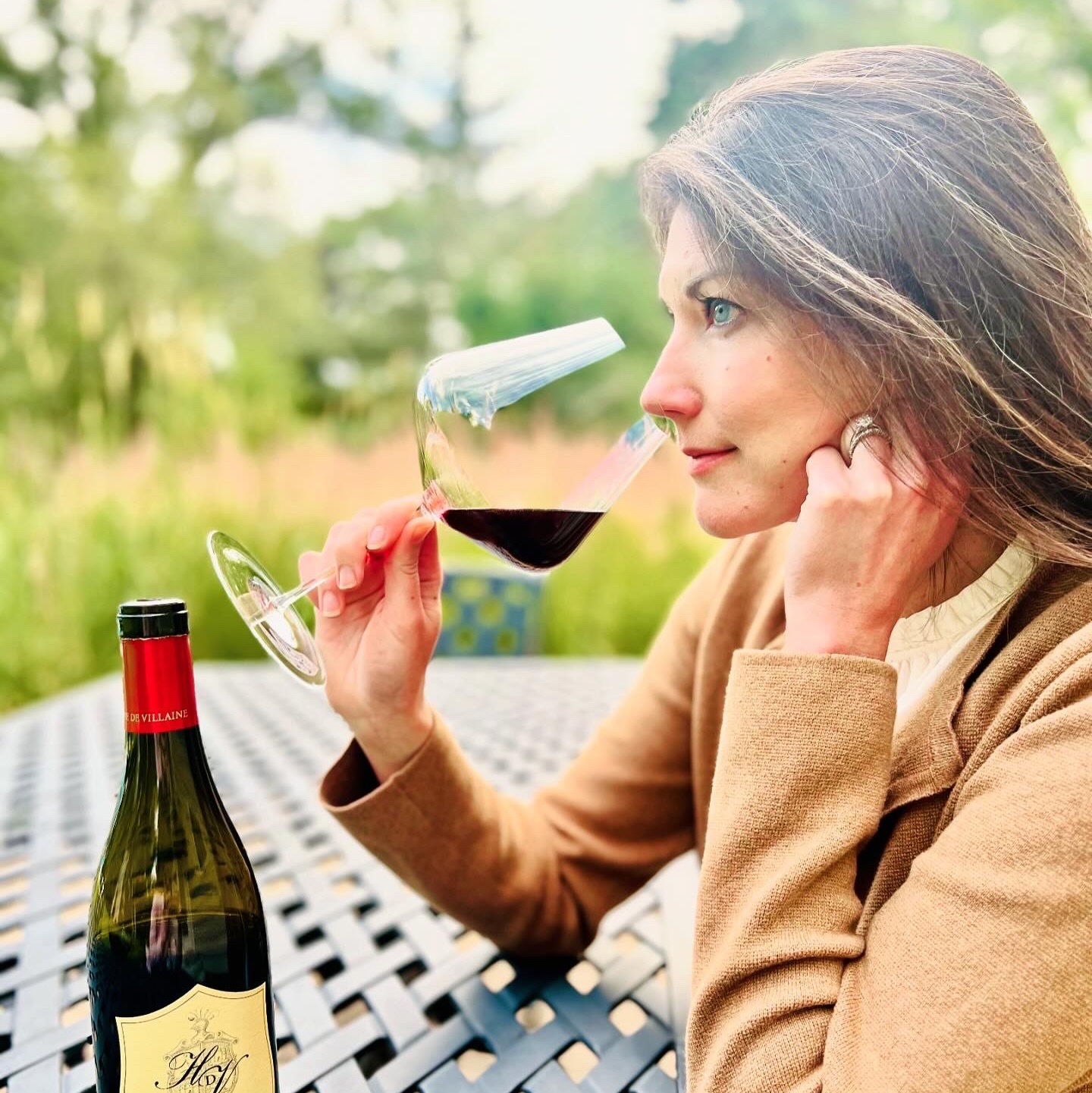
Catching up on my March Issue of Decanter, which, among other things, celebrates the wines of Spain from regions such as Rioja, Toro, Rias Baixas, Alicante, Manchuela, Valencia, and Jumilla. 🍷🍷🍷 This Issue reminds me of how much I have yet to explore in this country. 🇪🇸 It inspired me to have a glass of Rioja made from the Tempranillo and Garnacha (Grenache) grapes.
👁 This wine has a medium ruby hue with garnet rim variation. 👃 It has a medium intensity of developing aromas. 👄 Aroma and flavor notes are concentrated and include black cherry, red currant, plum sauce, violet, black licorice, anise, balsamic vinegar, black olive, sweet tobacco, leather, cedar, nutmeg, vanilla, clove, earth, and peat. This wine has medium acidity, medium tannins, high alcohol, and a medium(+) finish. It’s complex; it has finesse.
This wine is from La Rioja Alta, S.A., Viña Ardanza, Reserva 2012, with an ABV of 14.5%. This wine is predominately Tempranillo (78%), coming from 30-year-old vines, which is blended with Garnacha (Grenache) (22%). It has extended American oak aging.
I have tried numerous wines from this producer – La Rioja Alta, S.A. – and have loved them all. — 6 years ago





Raats
Original Unwooded Chenin Blanc 2018
Raats was an interesting visit from all our others. Raats is considered a small producer in the 8th ranked wine producing country in the world.
Raats buys the majority of their fruit. The vines around their tasting room, they work but, do not own. They produce their wines at another producer’s facility. It’s a daunting expense starting a Cellar Door or Winery. Custom wine crush facilities are a trend not just in Napa but, other parts of the world as well. In this particular case, it saves the owner enough money to drive the very nice cars parked outside their tasting room, one a Ferrari.
This is their no wood/oak Chenin Blanc.
The nose shows; soft tones of wet wool, peach, white, lemon, dry green herbs, grapefruit, chalkiness, volcanic minerals & yellow flowers.
The body is round, full and beautiful. Soft wet wool, peach, white, green melon, a little sour lemon, dry green herbs, grapefruit, chalkiness, palate pressing medium intensity volcanic minerals & yellow flowers. Nice round acidity and a well balanced, polished finish.
Photos of; the view from their tasting room, lots of beautiful original artworks from famous local artists...a few of them the Uncle of our host, examples of some of the soil structures around their tasting room vines and their upstairs tasting room.
— 7 years ago
Bodegas Breca
Old Vines Garnacha

Smells fantastic even with a cold. — 8 years ago
Schloss Gobelsburg
Tradition Riesling 2015

Easily the most enigmatic wine of this morning’s tasting. Briny, savory, ever-changing and shifting as I keep coming back to it. Everything from golden apple to tropical to green herbs and white flowers and dash of honey. The sum of its parts only merely suggests Riesling- I’ll admit I would have called this Loire Chenin. Beautiful wine with a unique identity and sense of place, produced from some of the oldest Riesling vines in the country. — 8 years ago
Jean-Michel Gerin
La Champine 2015
Younger and de-appelated vines. Cold ferment. No malo. Beautifully rich and creamy. Great value. — 8 years ago
Château Beaulieu
Comtes de Tastes Bordeaux Red Bordeaux Blend 2003

First wine since July trips! Back label: This 25-acre vineyard, planted in day and limestone soils, is situated in Salignac Gironde, 15 miles northeast of Bordeaux. He belongs to the Comtes de Tastes. Welldrained, south-facing slopes explain the name : Beaulieu, or
"beautiful plage".
Under the enlightened management of Count Vianney de Tastes, cover tropping, "green-harvesting" and leaf-pulling are the rule.
Consequently, yields are very low for the appellation at just 2,5 tons/acre, the equivalent of one bottle of wine per vine.
The 15-year old vines include 55% Merlot and 45% Cabernet Sauvignon. At 2,226 vines/acre, density is twice the average of most New World vineyards!
The hand-harvested fruit undergoes a pre-fermentation, cold maceration (3-5 days) after which the juice is slowly fermented (10-15 days), and then macerated for as long as taste (Tastes?) deems necessary. Malolactic then takes place in barrel, 60% of which are new.
The wine is aged on its lees for 12 months, gaining additional richness, freshness, and complexity and then bottled on the estate. Enjoy it now and over the next 5-7 years. Nice wine with complexity, earthy plummy aromas and lively palate. — 2 years ago
Wendouree
Shiraz Mataro 2011
From the disappointing wet 2011 vintage in South Australia where many producers did not produce a wine, but, typically with old vine fruit from Wendouree, this showed well. Quite ripe considering the vintage, yet medium weight palate - liquorice and spice notes with excellent intensity. Those old vines cover a multitude of sins like a cold wet vintage. 11 years is rather young for a Wendouree but given the vintage this was very polished. Has enough guts to have another 5+ years in the cellar. — 4 years ago
Château Léoville-Las Cases
Grand Vin de Leoville du Marquis de las Cases Saint-Julien Red Bordeaux Blend 1986
Every major holiday demands a celebratory wine. This Saturday Labor Day weekend, it’s a 1986 Leoville Las Cases.
The other weekend, we had Ribcap’s with a good Bordeaux & Napa Cabernet but, it was not what I was looking for with an Allen Brothers Ribcap. Allen Brothers steaks are the top 1% of beef in the country.
This 86 Leoville Las Cases started slow but, in short order excelled. The cork (not from my storage) made me hesitate to an extended decant. Even with the Durand corkscrew, it was a little tricky to remove the cork. However, the wine was still sound.
My favorite pairing is a Ribcap & an old Bordeaux. For me, no meal is slower or better. I grew up the youngest in a family of seven...raised by a single mother. My father passed away while I was four months conceived. So, we ate fast and fought for every scrap.
The nose reveals classic Bordeaux notes & style. Ripe, funky barnyard fruits of; cooked; blackberries, dark cherries, black raspberries, strawberries, black plum, dark cherries, slight dry cranberries, pomegranate, blueberries & rhubarb. Steeped tea, cola/red licorice, anise, golden brown to slightly burnt pie crust, dark, rich, turned earth, dry stones, limestone, cedar notes, old tobacco, underbrush, graphite, dry crushed rocks, dry top soil, bay leaf, hints of eucalyptus/mint, old, soft leather, touch of mushrooms, just a hint of band-aid/va, with bright, fresh & withering; dark, red, blue, purple flowers framed is soft violets.
The palate is; smooth, elegant, ripe and juicy. The 86 still shows some baby, slightly tarry & teethe tannins. The structure, tension, balance and length are incredible. This 86 has years of life ahead of it if you enjoy them at this age and older as I do. Ripe, funky barnyard fruits of; cooked; blackberries, dark cherries, black, strawberries, black plum, dark cherries, slight dry cranberries, pomegranate, blueberries, faint raspberries notes, & rhubarb. Steeped tea, cola/red licorice, anise, golden brown to slightly burnt pie crust, crispy toast, dark, rich, turned earth, dry river stones, charcoal w/ ash, limestone/sandstone, dry clay, cedar notes, old tobacco with ash, underbrush, graphite, dry crushed rocks, dry top soil, bay leaf, some vegetal characteristics, hints of eucalyptus/mint, old, soft leather, touch of mushrooms, used expresso grounds, dark chocolate, caramel, mocha powder, hints of band-aid/va, with bright, fresh & withering; dark, red, blue, purple flowers framed is soft violets. The acidity is a gentle rain shower and perfect. The long finish defines elegance, balance in fruit & earth, well knitted and goes on for several minutes in perfect harmony ending with dry earth & juiciness over the top.
What a treat it is to drink Bordeaux of this age & older. I love the style of 80’s Bordeaux and really appreciate the 12-13% ABV of that decade. Wish that never changed.
Not sure this makes it to 2060 but, there is still plenty of life in it. Don’t be afraid to decant it 1-2 hours without question on well stored bottles.
Photos of; Chateau Leoville Las Cases, old large wood vats, their archway you see as you enter the property from the D2 & staff working their Estate vines. — 6 years ago

Château La Fleur de Boüard
Lalande de Pomerol Red Bordeaux Blend 2005
The nose reveals, dark currants, ripe, slightly liqueur; blackberries, black plum, dark cherries, black raspberries, charred strawberries, hints of cooked rhubarb and raspberries. Mixed berry licorice/cola, anise, vanilla, cinnamon, nutmeg, touch clove, steeped fruit tea, herbaceous notes, leather, tobacco, charcoal, wood shavings, limestone minerals, dry stones, a little forest floor, dark fresh florals, lavender & violets.
The body is round, lush with some dusty tannins on the long set. It’s really beautiful right now but, there is still better things ahead over the next 5-8 years before it peaks. It’s silky & satiny. The structure, length, tension and balance are really starting to hit its stride. Dark currants, ripe, slightly liqueur; blackberries, black plum, dark cherries, black raspberries, plum, charred strawberries, hints of cooked rhubarb and raspberries. Mixed berry licorice/cola, anise, vanilla, cinnamon, nutmeg, touch clove, mocha powder, medium dark spice, steeped fruit tea, herbaceous notes, mint, expresso roast, leather, cedar, limestone minerals, dry stones, crushed dry rock & clay, a little forest floor, dark fresh florals, lavender & violets. The acidity is round & beautiful...really shows the greatness of the vintage. The finish is; lush, rich, ripe, elegant, well balanced, polished and quite persistent.
Photos of, Chateau La Fleur de Bouard, the tops of the stainless steel tanks that flow by gravity into the tanks that hang from the other side of the floor/ceiling and their Merlot vines.
I think this was under $35 when I bought it in futures.
Producer history & notes...Chateau La Fleur de Bouard was started by Hubert de Bouard, the owner of Chateau Angelus and Chateau Bellevue in St. Emilion. Hubert de Bouard purchased the vineyard from in 1998. This is a relatively new wine, as the first year for the wine was produced with the 2000 vintage.
Chateau La Fleur de Bouard is produced from a specific a two hectare parcel of old vines that are around 45 years of age, situated on the Lalande de Pomerol Plateau. The vineyard for Chateau La Fleur de Bouard Le Plus is planted to 100% old vine Merlot.
In 2011, La Fleur de Bouard completed a multi-year, top to bottom reconstruction of their entire wine making making facilities and the chateau, making this one of the most modern estates in the Right Bank. The most striking new feature is their hanging, reverse, conical, stainless steel vats as shown in my photos.
The production of La Fleur de Bouard sees a five day cold soak at 10 degrees Celsius and a four-week maceration in “OVNI” stainless steel tanks. The wine is vinified in a combination of stainless steel vats and short, squat shaped oak barrels. The wine receives regular pigeages.
Malolactic fermentation takes place in 100% new, French oak barrels from four different coopers, Taransaud (40%), Demptos (40%), Darnajou (15%) and Vicard (5%). Aging sur lies takes place in 100% new, French oak barrels for an estimated 33 months prior to bottling. The wine requires collaring time for the oak to fully integrate into the wine, and for the secondary notes to develop. — 8 years ago
Mendel Wines
Finca Remota Malbec 2015
On the nose, ruby, ripe and almost liqueur fruits; blackberries, black raspberries, dark cherries, black plum, dark chocolate; great baking spices, loamy clay, spice, dark moist soils, black licorice and fresh dark floral with violets.
On the palate, the body is full. The tannins and dusty and just a touch sticky. Beautiful but needs to age. ruby, ripe fruits; blackberries, black raspberries, dark cherries, black plum, dark chocolate is crazy good; great baking spices, loamy clay, spice, dark moist soils, black licorice and fresh dark floral with violets.
Photos of, another side of their Estate vines, very old gnarly vine and olives trees waiting to be picked as soon as their done with processing the 18 vintage.
Mendel makes some very nice quality wines at an excellent price point.
The Finca Remota Vineyard is located in Altamira, Valle de Uco at 1,040 meter of elevation. The vineyard has a sandy- loam and stony soil, very loose of alluvial origin. The climate is cold in winter with occasional snowfall, and temperate in summer with cold nights, which provides the region with a great thermal amplitude daily. The average annual rainfall is just under 6 inches. Our “Semillon” and “Malbec Finca Remota” are produced from grapes grown in the oldest and smallest part of this vineyard planted in 1947. It has superficial irrigation and a traditional management of the crop. It is conducted in low French trolley system and the yield is lower than 4 tons. per hectares. The rest of the vineyard receives a modern management: the vines are conducted in medium height French trolley system and it has drip irrigation. In this vineyard there are 8 hectares of Malbec, 3 hectares of Cabernet Sauvignon, 2 hectares of Semillon, 2 hectares of Cabernet Franc and 2 hectares of Petit Verdot. — 8 years ago

Bob McDonald

See previous Delectable note in July 2023. An excellent Riesling particularly for a “Young Vines Riesling “. Notes of Mandarin with traces of paraffin (TDN) being present. A fleshy luscious palate which is simply delicious - low acid. A touch of fruitiness but finishes dry. From Henty, a little known wine district on the south west coast of Victoria and exposed to the cold southern ocean. A great area for quality Riesling as Crawford River shows. Sadly my last bottle of the Young Vines 2016. — a year ago