Sky Saddle
Sky Vineyards
Mt. Veeder Zinfandel

2013 spectacular! — 4 years ago
Château Margaux
Premier Grand Cru Classé Margaux Red Bordeaux Blend 1926
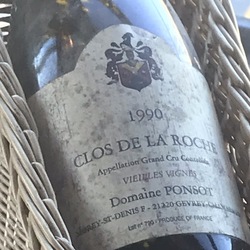


Tasted blind. Dark amber/tawny color. Notes of brown sugar, hickory, earth, saddle leather and some cola. Sweet to the taste with lots of complexity. Fruit is still present, with tannins fully resolved of course. Guesses by the boyz are 50’s Bordeaux, but I think it’s older. I’ve had two really old bottles of Chateau Margaux from the 20s and 30s, and I think it’s in that camp so I go with a guess of Margaux from the 20’s. Bingo. We’re told this was given many hours in the decanter and then we consumed it over 3 hours… it was alive from start to the last drop. What a great experience to drink grape juice that is nearly 100 years old. Bravo and thanks Stan! — 6 years ago


Podere ai Valloni
Vigna Cristiana Boca Nebbiolo Blend 1997

One of the best 97’s I’ve had. Being 2 hours north of the Langhe helped tame the ripeness of the vintage. It’s ripe but but also classic Boca and superbly complex. Big ripe cherries, confectionary cherries, gorgeous roses, huge spice and some funk that takes a few hours to blow off. Tree bark, old library books, spices galore and even sweet mint. Loads of sweaty saddle leather. Just a stunning nose. Also shows some youthful vigor. Palate is supple and sexy with gorgeous purity and freshness. Superbly complex, I mean super super complex with just an explosion of inner moth florals and gorgeous deep mid season cherry fruit. Gorgeous velvety tannins and wonderful freshness and acid. Long, lingering finish that pumps the fruit. Long long finish. Wonderful texture and mid palate opulence but also classically lean Boca that has amazing presence and length. This is terrific. — 7 years ago
Joseph Phelps Vineyards
Insignia Estate Grown Napa Valley Cabernet Sauvignon Blend 1994

Just a few bottles from an awesome Open That Bottle Night celebration this past weekend.
Up there for wine of the night. En mag. Fruit and secondary notes in perfect harmony. Old black cherry and muddled raspberries with bay leaf, fig, saddle leather, and underbrush. Incredible drinking window. — 8 years ago



Whitecliff Vineyard
Sky Island Cabernet Sauvignon Blend 2018

Fireplace, wine and dark chocolate, tasting like dark fruit, black cherry with a bit oak. (Year 2018) — 2 years ago
Château La Mission Haut-Brion
Pessac-Léognan Red Bordeaux Blend 1986
Dark purple tawny and opaque. Notes of gravel stone, freshly cut cigar, saddle leather, mocha and some barnyard floor. Has a great earthiness to it. Smooth in the mouth with great structure. The fruit and finish are slightly dry, and with that I suspect the wine is slightly past its most powerful peak. But overall the perfume of the wine is amazing and certainly memorable. — 6 years ago
Bedrock Wine Co.
Gambrels of the Sky California Grenache

Love these! — 7 years ago
Château L'Evangile
Pomerol Red Bordeaux Blend 2012
Masterclass in San Francisco with Saskia De Rothschild, Chairwoman DBR Lafite. Chateau L’ Evangile is another property owned by the Rothschild Family.
The nose reveals; dark, deep currants. Ruby, ripe, blackberries, dark cherries, black plum, blueberries, baked strawberries and black raspberries. Dark chocolate, cinnamon, caramel, clove, touch of nutmeg, dark rich soils, steeped black tea, some black licorice, tree sap, eucalyptus notes, leather, soft tobacco, saddle/wood with ruby, fresh and withering dark, red flowers with soft violets.
The body is full. The mouthfeel gorgeous. The tannins firm, powdery, tarry & sticky. currants. Ruby, ripe, blackberries, dark cherries, black plum, blueberries, baked strawberries and black raspberries. Dark chocolate, cinnamon, caramel, clove, touch of nutmeg, dark rich soils, steeped black tea, some black licorice, tree sap, eucalyptus notes, leather, soft tobacco, saddle/wood with ruby, fresh and withering dark, red flowers with soft violets. The structure, tension, length and balance are beginning to find its groove. The acidity is nice round and beautiful. The long finish is, sexy on the palate, ruby gorgeous, well balanced, polish and beautiful. It lingers nicely for minutes.
All wines arrived weeks ago directly from the Chateau.
Photos of; the Crown Room on the 23rd floor of the Fairmont where the Masterclass was held, tasting set up, our double decanters and pourers and another view of the city of San Francisco. — 7 years ago
Three Sticks
One Sky Sonoma Mountain Chardonnay 2016
Beautiful color. Nice pineapple, tropical fruit nose and taste profile. Good balance. Acidity was begging for some food to be complimented. — 8 years ago
Produttori del Barbaresco
Barbaresco Nebbiolo 2009
Light app tonight for dinner. Burrata, roasted garlic, two different cherry tomatoes picked tonight from the garden, pesto sauce, olive oil and Tondo balsamic vinegar. The only balsamic to use. Found it in Tuscany years ago and it’s all we use. You can order it on Amazon but, not inexpensive. All over, crostini’s drizzled with smoked olive oil. Soooo good!
The nose reveals, sweet & sour dark cherries, dark berry mix, stewed dark plum, blue fruit hues, touch of baked strawberries, tomato with leaf, sweet tarry notes, limestone minerals, dark rich soil, light baking spices and dark & blue fresh florals.
The body is medium full. Soft, round, tannins 70% resolved. The structure, length, tension has hit a high point. Ripe; sweet & sour dark cherries, dark berry mix, stewed dark plum, blue fruit hues and a touch of baked strawberries. Tomato with leaf, sweet tarry notes, on the long decant, add malt & light caramel, used leather, saddle-wood/cedar, limestone minerals, dark rich soil, medium dark spice, light baking spices and dark & blue fresh florals. The acidity is nice. The finish is good, balanced and lasts minutes.
Photos of, the tasting room at Produttori which is just under and to the right of the clock tower in the arial photo, arial view of the hilltop town of Barbaresco and our delicious small plate.
Producer note...Produttori is the third largest co-op in all of Europe. Be that they are a co-op, they still make some exceptional wines as well as great QPR wines. 🇮🇹 — 8 years ago

Ferrari-Carano
Sky High Ranch Pinot Noir 2019

Very Good! — 3 years ago
G.A.E.C. Bonneau & Fils
Réserve des Célestins Châteauneuf-du-Pape Red Rhône Blend 2009
We first tried a bottle of Celestins in a restaurant in Gigondas some years ago, and for me it was a WOW Wine. Had this latest bottle on Sunday with Roast Pork. Medicinal to begin with which blew off. Barnyard aromas - horse manure. In hindsight this could’ve been Brett but the overall impression and tasting was impressive and memorable. Glad I have 3 left. Showing a medium to full bodied palate. This is textbook CdP in the old school genre. The tannins are silky and sexy - a liquorice note together with saddle leather. Henri Bonneau passed away in 2016 and the wine making is now carried out by his son, Marcel. A visit to his archaic cellars was keenly sought after and rarely granted. Mould all over the walls, rickety stairs light bulbs dangling from the ceiling and a floor which stuck to the soles of your shoes was how one visitor described his experience in the cellar. Nevertheless this is a CdP up there with Rayas and the top Cuvée from Beaucastel. The blend is usually 90% Grenache with the balance made up of around 4 or 5 different varieties. — 4 years ago
Ridge Vineyards
Monte Bello Vineyard Cabernet Sauvignon Blend 1996
Dark purple tawny color, opaque. Silky nose. Silky wine. Notes of black fruit, cedar, mocha, leather saddle and some sweet black cherries. Silky in the mouth. In a great spot. Great now but will likely last a couple of more decades. — 6 years ago


Chateau Montelena
The Montelena Estate Napa Valley Cabernet Sauvignon 1999
Few wines are as near and dear to my heart as Montelena estate. My birthday eve dinner with my daughters and we had my daughter Bailey’s birth year to celebrate. Delicious mature cab, saddle leather, cherry tobacco and stewed plum. — 8 years ago

Pommery
Royal Blue Sky Sur Glace Champagne Blend

Of course good. — 8 years ago
Château Duhart Milon
Pauillac Cabernet Sauvignon - Merlot Blend 2006
The 06 vintage was more highly praised by the Bordelais than it delivered. That’s not to say, some producers didn’t deliver.
This 06 is not at its peak...still needs a few years. Will it be a wine that blows you away? Not likely but, it will deliver nice fruit, earth & balance. Especially, with a Ribeye.
The nose shows; ripe; blackberries, dark cherries, black raspberries, baked strawberries, dry cranberries & some black plum. Saddle-wood, limestone minerals, dry stones, cinnamon, soft spice, light vanilla, black rich earth, touch of black licorice and red & dark fresh florals.
The body is round and a little lean but puts on weight with food and decanting. The structure, length & tension are falling into place. The fruits are ripe and expressive. Blackberries, dark cherries, black raspberries, baked strawberries, haunting blue fruits, dry cranberries & some black plum. Saddle-wood, touch herbaceous, mint, limestone minerals, dry clay, dry stones, cinnamon, soft spice, cola, light vanilla, black rich earth, touch of black licorice and red & dark fresh florals. The acidity is round and beautiful. The finish is on the leaner side but, well balanced and lasts a full minute. 9.1 without the Ribeye, 9.2 with it.
Photos of, Duhart Milon, Cabernet ready to to be pressed, wine making facilities and their barrel room.
Producer history and notes...the Rothschild family is divided into two sects for lack of a better word. There are the ones that own Mouton Rothschild and Cleric Milon etc. and the other owns Lafite and Duhart. The two sides of the families don’t necessarily get along. However, they are two of the oldest/wealthiest families in recorded history.
Duhart Milon was originally known only as Chateau Milon. At one time the estate was the second wine of Chateau Lafite.
The story about how this came to be is interesting. The owner of Lafite at that time was the Marquis Nicolas-Alexandre de Segur. King Louis XV called him “The Wine Prince” because of his extensive vineyard holdings in Bordeaux. The Milon vineyards were well regarded but, not as good as Lafite, which is how the wine came to be thought of as the second wine for Lafite.
In 1815, the property was considered by some people as a fourth growth Bordeaux wine in the making. In those days, the wine was sold under the name of Chateau Mandavy-Milon. Between 1830 and 1840, the Casteja family inherited the estate.
The label of Duhart Milon, according to family tradition came about from an old legend written about one of their ancestors, Sir Duhart. Sir Duhart, was rumored to have been a pirate for Louis XV. He retired in Pauillac. The “Pirate’s House” on the Pauillac port existed up to the 1950’s. That original building inspired the label for the Duhart-Milon wines.
The Casteja family remained in possession of Duhart Milon until the first part of the 20th century. At the time, Chateau Duhart Milon was one of larger Pauillac estates with around 50 hectares of vines.
In 1937, the result of successive inheritances led to the sale of Duhart Milon. The Left Bank property went through five different owners in just 25 years. As well, the vineyards were split up and with the frost of 1956, the quality of Duhart Milon continued declining until the Rothschild family purchased the property in 1962.
At that time of the sale, Chateau Duhart Milon included 110 hectares of land, of which only 17 hectares were planted with vines. The entire vineyard was in desperate need of replanting. Major renovations were urgently needed in the vineyards, which demanded work on the drainage and replanting.
The size of their vineyards were also increased with the purchase of other parcels adding to the size of their Medoc holdings. New cellars needed to be built as well.
Chateau Duhart Milon remains one of the few 1855 Classified Growth estates without an actual Chateau. At Duhart, all you will find are the cellars, vatting rooms and barrel storages.
During the period of 1970 to 2000, the vineyards nearly doubled in size! Additionally, they constructed new cellars, renovated and modernized their wine making facilities as well in 2003. By 2008, the wine of Duhart Milon increased in quality, stature and price.
Much of the price increase had to do with the association with Chateau Lafite Rothschild, which had by that time, become the most in-demand, collectible wine in China. By the time the 2015 vintage was offered, prices had dropped to a more affordable price level due to changes in Chinese laws regarding client gifts/bribes.
The 152 hectare vineyard of Chateau Duhart Milon includes; 76 hectares of vines planted to 67% Cabernet Sauvignon and 33% Merlot. This makes Chateau Duhart Milon one of the few 1855 Classified Growths with only two grape varieties planted in their vineyards.
The average age of the vines are 30 years old. The vineyard is planted to a vine density of 7,500 vines per hectare.
Duhart Milon vineyards are located in northern Pauillac, on the western side of Chateau Lafite Rothschild, on the Milon hillside, which is not far from the Carruades plateau...now Lafite’s second wine. This places the vineyard quite close to Chateau Mouton Rothschild and Chateau Clerc Milon. However, because of micro climates, this is a slightly cooler terroir, due to its northern exposure.
The naturally cooler soils provides more freshness to the wine, and allows for later picking. The terroir of Chateau Duhart Milon is a combination of gravel, sand and limestone soils. The Duhart Milon vineyards are unique in Pauillac, as the vines are for the most part, located in 1 single, large parcel.
The vinification of Chateau Duhart Milon takes place in temperature controlled stainless vats. Malolactic fermentation takes place in vat. Chateau Duhart Milon is then aged in an average of 50% new French oak barrels for 14 to 16 months, depending on the vintage.
There is a second wine, Moulin de Duhart, that was created in 1986. There is also a third wine produced by the estate, Baron de Milon. — 8 years ago

Paul T, Missing My Beautiful Wife 24/7
I only drink wines that taste like Patent leather, soft leather is for sissy’s,😬
Katelin
Love. The aroma smells like notes of briny olives. Tannic but still smooth. — 8 months ago