Taking Root
El Coto de Rioja
Crianza Rioja Tempranillo 2019


I tasted this vintage a year ago, and not much has changed. It is a dark wine, one which lets very little light pass through. The nose displays more fruit than oak, which is a good sign if you plan to chill it and serve it outside. Blackberry, raspberry, cassis, anise all shine brightly, with light notes of clove and cinnamon. The palate is clean and fresh, with the dark fruit taking a bow. The tannins have softened somewhat over the past year, but are still maybe a little firm for an outdoor meal under the sun, but the acidity is brisk and refreshing. — 2 years ago
Ziereisen
Baden Blauer Spatburgunder 2018

Bright garnet/ruby color. Beautiful floral nose with hints of dark cherry and root beer. Bright dark cherry fruit on the pallet with hints of fresh soil, minerals and just a touch of that root beer. Bright and fruit forward. Soft texture and well balanced. Excellent German Pinot Noir. — 4 years ago
Château Calon-Ségur
Saint-Estèphe Red Bordeaux Blend 2001
‘01 is drinking beautiful in ‘22. Primo. 21 years old is drinking age, how about that?
This wine has aged beautifully and remains strong. Dense and rich, but soft and supple. I’m leaning heavily into the current and jammy notes that remain, but the obvious flavors are the old leather, tobacco, and sage.
Color comes out dark ruby red, but after about an hour in the glass you can see the oxygen taking hold. No decanting required. Glad I bought two of these! — 5 years ago
E. Guigal
Château d'Ampuis Côte-Rôtie Syrah 1999
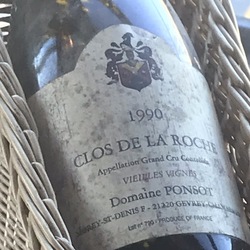

Decanted for an hour before taking to the restaurant. Nice deep dark tawny color. Great nose. Notes of red and black fruit, some mocha, some dark earth, a little menthol and some wood. Rich and silky in the mouth. Finally reaching its drinking window. (Other previous bottles were closed and not showing much). Becoming La La like. — 5 years ago
Booker Vineyard
Fracture Paso Robles Syrah 2010
This bottle marks the first time I have had a booker wine with this much bottle age. IMO, still a long way to go with this one. Deep blue and blackberry flavors with rocky minerality, and vanilla flavors (almost root beer like). Love pretty much anything Booker makes. This wine included. — 8 years ago

Château Brane-Cantenac
Grand Cru Classé en 1855 Margaux Red Bordeaux Blend 2005
I have a six-pack of this 05. I thought after 10 years in bottle, it would be interesting to check in on its evolution. While tasty, I’ll wait another 8-10 to open another. Even after 2-3 hours in the decanter, it’s still a very young adolescent. On the nose, slightly sour blackberries & dark cherries, dark currants, baked black plum, haunting blue fruits, anise, whiff of spice, steeped tea, dry stones, dry crushed rocks with dry top soil, caramel, vanilla with fresh & dry red florals. The body is thick & full. Tannins are starting to round out. It’s velvety on the palate. The fruits are; bright, fresh & ripe and really show the greatness of the 05 vintage. Dark currants, blackberries, dark cherries, baked black plum, haunting blue fruits, baked strawberries, cherries, raspberries on the long set, dark spice, clay & loamy dry top soil with crushed rocks, dry stones, cigar with ash, graphite, dry stems, slight herbaceous character, mint, used leather, clove, caramel, vanilla, fresh & dry red florals with violets. The round acidity is about perfect. The structure and length are still strong. The balance is in harmony. As for the long finish, it’s lush, ruby, rich and well polished. Photos of; Chateau Brane Cantenac, large wood vats, Henri Lurton and Estate vines. Producer notes and history...Chateau Brane Cantenac began in the early 17th century. At the time, the estate was known as Domaine Guilhem Hosten. Even that far back, wine was produced from the property. In fact, the wine was so highly regarded it was one of the more expensive wines in Bordeaux. It sold for almost as much money as Brane Mouton. This is interesting because of who went on to buy the vineyard in the 1800’s. The Baron of Brane, also known as “Napoleon of the Vineyards”, purchased the Chateau in 1833. At the time of the sale, the estate was called Chateau Gorce-Guy. To get the funds needed to purchase the Margaux vineyard, the Baron sold what is now called Mouton Rothschild, which was at the time of the sale, known as Chateau Brane-Mouton. Not such a good move with hundreds of years in hindsight! In 1838, the Baron renamed property taking his name and the name of the sector where the vineyards were located and called it Chateau Brane Cantenac. The Chateau later passed to the Roy family, who were well-known in the Margaux appellation in those days, as they owned Chateau d’issan. Moving ahead to 1920, the Societe des Grands Crus de France, a group of merchants and growers that owned several chateaux located in the Medoc including; Chateau Margaux, Chateau Giscours, and Chateau Lagrange in St. Julien, purchased Chateau Brane Cantenac. Five years later, M. Recapet and his son-in-law, François Lurton, took over Brane Cantenac along with Chateau Margaux. Lucien Lurton (the son of François Lurton) inherited Brane Cantenac in 1956. Today, the estate is still in the hands of the Lurton family. Brane Cantenac is owned and run by Henri Lurton. After being given the responsibility of managing Brane Cantenac, it was under the direction of Henri Lurton that large portions of the vineyard were replanted. Vine densities were increased, the drainage systems were improved and the plantings were also, slowly changed. The vineyard of Brane Cantenac is planted to 55% Cabernet Sauvignon, 40% Merlot, 4.5% Cabernet Franc and .5% Carmenere. Carmenere was used for the first time in the 2011 vintage. The only other Chateau I know that still uses Carmenere is Clerc Milon. The 75 hectare Left Bank vineyard of Brane Cantenac is essentially unchanged since it earned Second Growth status in the 1855 Classification. At least that is the case with the 45 hectares used to produce the Grand Vin of Brane Cantenac. Those 45 hectares are planted surrounding the Chateau. Those vines are located just in front of the Cantenac plateau and are the best terroir that Brane Cantenac owns. They have other parcels, which are further inland and much of those grapes are placed into their second wine, Le Baron de Brane. Those additional hectares can be divided into 3 main sections. Behind the Chateau, they have 15 hectares of vines on gravel and sand, 10 hectares across the road with sand, gravel and iron and a 13 hectare parcel with gravel called Notton, which is used for their second wine. The vineyard is planted to a vine density that ranges from 6,666 vines per hectare on the plateau and up to 8,000 vines per hectare for the vines located behind chateau, in their sandier soils. The higher levels of vine density are always found in the newer plantings. The terroir of Brane Cantenac consists of deep gravel, sand and clay soil. Experiments in the vineyards are currently looking at becoming more organic in their vineyard management. Today, more than 25% of Brane Cantenac is farmed using organic farming techniques. It is expected that over time, the amount of hectares farmed with organic methods will be increased. Brane Cantenac has gone through 2 relatively recent modernization’s in 1999, when they added began adding the first of their smaller vats to allow for parcel by parcel vinification and then again in 2015 when they completed a much more complete renovation of their cellars and vat rooms. While Brane Cantenac is a traditional producer, they are no stranger to technology as they were one of the first estates to embrace optical grape sorting machines. In very wet vintages, they can also use reverse osmosis. To produce the wine of Chateau Brane Cantenac, the wine is vinified in a combination of temperature controlled, traditional, 22 oak vats, 18 concrete tanks and 20 stainless steel vats that vary in size from 40 hectoliters all the way up to 200 hectoliters, which allows for parcel by parcel vinification. 40% of the fermentation takes place in the oak vats. The oldest vines are vinified in vats that are selected to allow for separate parcel by parcel vinification. The younger vines are vinified more often together in the same vats. However, the Carmenere is entirely micro-vinified, meaning that those grapes were completely vinified in barrel, using micro-vinification techniques. This can also happen because the amount of grapes produced is so small. Some vats can be co-inoculated, meaning they go through alcoholic fermentation and malolactic fermentation simultaneously. At Chateau Brane Cantenac, malolactic fermentation takes place in a combination of French oak tanks and barrels. The wine of Brane Cantenac is aged in an average of 60% new, French oak barrels for 18 months before bottling. The initial 2 months of aging is done with the wine on its lees, which adds more depth to the wine. There second wine is Le Baron de Brane. Le Baron de Brane is not new. In fact, previously, the second wine went under the name of Chateau Notton, which took its name from one of the main parcels where the grapes were planted. During the late 1950’s and into the 1960’s, having a second wine was important as the estate declassified 3 vintages, due to extremely poor, weather conditions in 1956, 1960 and 1963. Production of Chateau Brane Cantenac is about 11,000 cases per year. — 9 years ago


Giacomo Conterno
Riserva Monfortino Barolo Nebbiolo 1955

1955 Giacomo Conterno Barolo (Ditta) – The "Great Emperor"
Appearance: The wine unfurls in the glass with a majestic, deep garnet core that gracefully fades into a wide brick-orange rim—the unmistakable heraldry of seven decades of life. It is perfectly clear and luminous, promising a profound experience.
Nose (Aroma): The aromatic profile is a walk through an ancient, sacred forest after the rain. It opens with a deep sense of humid earth, fungal truffle, and a subtle, refined smoked leather. As it opens, a beautiful core of blueberry compote and dried dark fruits emerges, intertwined with a complex tapestry of Chinese medicinal herbs and dried florals. It is both powerful and hauntingly ethereal.
Palate (Taste): The palate is a breathtaking journey into umami and complexity. True to the legend, the fruit has transformed into an intense medley of sweet preserved fruit (dried apricot, date). This is immediately met with a profound savory depth: a distinct salted Chinese preserved plum character provides a mouthwatering salinity, while a fine dusting of astragalus root powder and angelica root brings an authentic, warming medicinal bitterness that defines the wine’s regal structure. A hint of spicy dried ginger soda lingers on the mid-palate, adding a lift of unexpected freshness.
Acidity & Structure: The acidity is the heartbeat of this wine—sustained, mellow, and incredibly refined. It does not jab but rather flows continuously, carrying the dense, dried flavors across the palate with remarkable energy. The tannins have fully resolved into a silken, powdery texture, leaving nothing but harmony.
Finish: The finish is eternal, echoing with notes of dried citrus peel, forest floor, and a final whisper of sweet tobacco and herbs. A truly humbling experience; this is not merely a wine, but a living artifact of time, worthy of the title "Great Emperor." — 8 months ago
Freycinet Vineyard
Tasmania Pinot Noir 2015
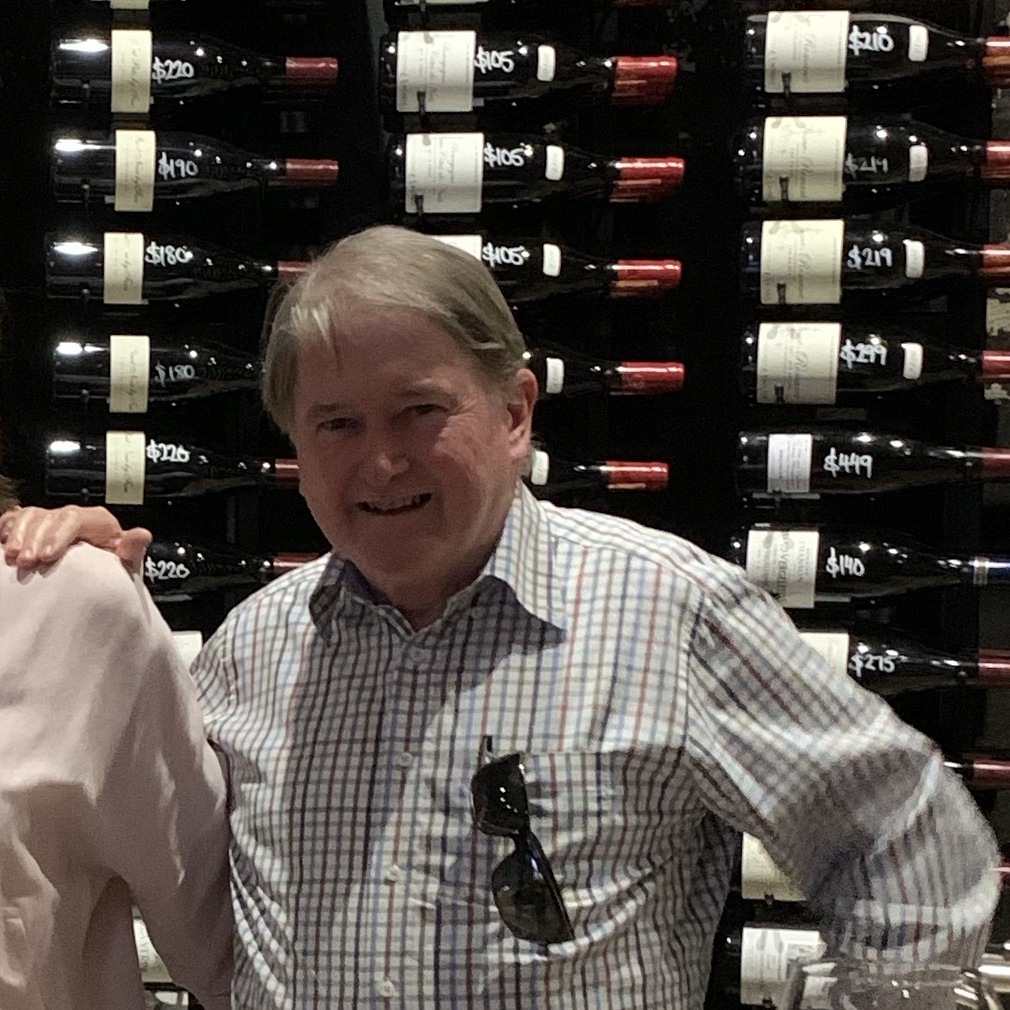
See previous note for this vintage and cuvée in July 2022. An exceptional Tassie Pinot Noir. My last Freycinet in the cellar which is an oversight on my part. A sweetish yet earthy palate showing savoury root vegetable flavours, like beetroot as well as black cherry. A luscious flavoursome delicious palate. I have had 15 year old Pinots from Freycinet before and this one could go the distance. — 3 years ago
Ermes Pavese
Blanc de Morgex et de la Salle Prié Blanc 2020

Exploring the bouquet of the 2020 Blanc de Morgex et de La Salle is like standing beneath a waterfall, taking in all the moist air, wet stone and flora that surrounds you. It’s soft-textured and round, pleasing to the palate with ripe orchard fruits and a subtle savory-saltiness that balances. This varietal Prié Blanc tapers off fresh, leaving a cheek-puckering twang of citrus tension. (Eric Guido, Vinous, June 2022)
— 4 years ago
Paul Jaboulet Aîné
La Chapelle Hermitage Syrah 1961
Day 2 of WineBoyz Wineapalooza. Tasted blind, but the whole weekend was built around taking down this bottle so we had a good idea this was it. Deep dark reddish color with amber rims. Looks a little like an old Madeira, and darker the 61 Latour next to it. Crazy nose that evolved all day long. Deep and penetrating, very floral. Notes of dark fruit, smoked meat, black truffles, cocoa, hoisin sauce, mushrooms and dark earth. Rich and silky in the mouth. I kept a glass of this in front of me all day long so I could monitor the evolution of it. Peacocks in a way that only a few wines can. My friend got this at an auction where the consignor was the original owner and acquired it directly from the Domaine - so impeccable provenance. Clearly one of the great, all-time bottles. A freak of nature and winemaking. Thanks for sharing, Murray! — 5 years ago
Envinate
Táganan Parcela Margalagua Red Blend 2018

A bit deep wine red with transparency. Raspberry aroma. Sour sweet. Mid - body. Elegant. Low alcohol concentration, but I would like to enjoy it by taking longer time. Sweet is surpassing sour. With cherry. Minerally. 2018 @, Kping - XH, 200928-201012 — 6 years ago
R. López de Heredia
Viña Tondonia Reserva Rioja Blanco Malvasia Viura 1987

Dark golden bordering Carmel. Seductive nose. Ginger root, organic honey, and toasted almond. The oxidation is in a great spot. Medium weight with dried apricot and pineapple. Acidity carries on the finish. In a wonderful place, drink or hold. — 8 years ago
Château Pradeaux
Bandol Mourvedre 2017

Blind tasting for the staff. Still loads of tannin here but approachable enough. Dried black currant, mulberry, and licorice root. Garrigue. They all guessed ten year old Southern Rhone or Bordeaux. Lovely. Got this on sale for $27 about 5 years ago. — 9 months ago

Domaine François Raveneau
Blanchot Chablis Grand Cru Chardonnay 2003

The 2003 Blanchot pours a straw color with medium viscosity. On the nose, this is developing and all about the minerals with crushed seashell and chalk taking the lead over some verbana and a creamy lemon leesy thing. On the palate, the wine is dry with medium+ acid. Confirming the notes from the nose. The finish is long and savory, leesy and mineral laden. A special wine that needs air to really come alive. Drink now with patience and through 2033. — 2 years ago
Mer Soleil
Reserve Monterey County - Santa Lucia Highlands Chardonnay 2019
Taking its name from the sea and sun – the two forces of nature that shape its character. Pale lemon, aromas of Stone and tropical fruits, with floral and sweet spice notes, from a cooler climate, more hang time on the vine. On the palate flavors of apple, peach & apricot with lemon zest and toasty vanilla notes. Smooth long finish, well balanced, nice acidity, ending with fruit, vanilla oak and mineral character. Sip’s well now. Pair this with some pan sautéed white fish with a Beurre Blanc sauce. — 3 years ago
Rivers-Marie
Occidental Ridge Vineyard Pinot Noir 2016
My 2016 Rivers Marie Pinots are about gone…SummaOV is left. Occidental, Silver Eagle and SummaOV are always my favorites. I’m between a 93-94 here.
Great example of a Pinot that has a lot of power but plenty of balance. Deep black cherry colored in the glass but the aromatics are much more savory than expected. There’s an animalistic/feral quality to this initially (that I love) showing a smoked meat flair alongside dark blood orange and ripe black cherries. Commanding mouthfeel and great acidity. Continual back and forth of dark berry fruit and savory/herbal notes. The use of whole cluster is noticeable but it does a good job complimenting the wine (more high toned) and not taking center stage (as in, not overly stemmy/green). Wonderful lengthy finish. More brooding and savory than Silver Eagle but certainly not in the vein of a “cab lovers pinot” style. This was delicious and likely hangs in this window for at least 5+yrs. — 4 years ago

Leeuwin Estate
Art Series Margaret River Cabernet Sauvignon 2013

Boy, we have been drinking good wines this weekend. Another high scoring one. Intense is the key word. Intense in spice, intense in dark, vibrant fruit, and intense in its finish taking you through multiple layers before slowly disappearing and leaving you desperate for more. — 8 years ago

Robert Torretti
I do love Musar. The bottle variations can throw you for a loop, but this one came out with a beautiful nose and a great palate. I sampled it by CoraVin the morning before taking it to Eulalie in Tribeca for dinner with old mates visiting from London who love Musar as much or more than I do. It had beautiful color and was translucent. I must have jostled it too much on the subway downtown because when we opened it, it was cloudy and had some fine sedement. Did not decant but allowed it to evolve over a couple of hours. I have a couple more bottles and will look forward to trying them. Enjoyed with lamb dishes and quail stuffed with foie gras and other offal. Delicious! — a month ago