Château Segur De Cabanac
Château Calon-Ségur
Le C de Calon Segur - St Estephe de Calon Segur Red Bordeaux Blend 2021


Chateau La Tour de Segur
Lussac-St. Émilion Red Bordeaux Blend 2014

Goes well with pizza. Vanilla and chocolate mixed. Veryyyy smooth. — a year ago
Château Capbern-Gasqueton
Saint-Estèphe Red Bordeaux Blend 2009

Great value at $50.00 from K&L
Web notes,
The owner of this Chateau, Calon Segur takes some of it name Calon from the word 'calones' which were small transport skiffs that used to haul goods up and down the Gironde river. Back then boats were the best mode of conveyancing wine plus preferable to the reluctant donkey and other landlubbing transports. This fact is a big reason for this region's long successful trading history. Much to the dismay of more land locked wine making regions, Bordeaux enjoyed direct access to the water. Happily shipping great wines such as Chateau Capburn Gasqueton for centuries. As this red wine was transported away from the port, the owners would farewell it's strawberry and raspberry driven fruit flavours bound for distant thirsty lands. It's beautiful chalky tannins and fine oak would be missed as they were well on the way to our store's shelves, cellars and tummies. Hence raise a big cheers to the diminutive but very essential Calons! (And amazing value Bordeaux reds)
Chateau Capburn Gasqueton is situated in St Estephe, on the left bank of Bordeaux, France. Grapes have been grown on the property's grounds since the 12th century. However, the 18th century saw it's elevation into quality wine production when Nicolas-Alexandre, owner of Latour, Lafite and Mouton bought the Chateau along with Chateau Calon Segur. From 1894 to 2012 the Gasqueton family owned the Chateau - producing wines of great finesse and elegance. In 2013 the French insurance company Suravenir bought Chateau. Since then they have heavily invested in upgrading the estate whilst ensuring they preserve this historic and treasured wine producer. Its vineyard comprises of 62% Cabernet, 37% Merlot and a petite drop of 1% Petite Verdot! — 4 years ago

Paul T, Missing My Beautiful Wife 24/7
The things you can find when you copy & paste 🤷🏼♂️Château Calon-Ségur
Le Marquis Saint-Estèphe Red Bordeaux Blend 2014
I'm an big fan of Calon Segur, and now too of their second wine. An open and giving wine, it combines plum, blueberry, chocolate box, leather, tobacco, spice in a generous style. Decent grip from thanking and a soft velvet structure make for an enjoyable experience where one sip easily follows with the next. — 8 years ago

Château Lacapelle Cabanac
Cahors Malbec
Vintage 2006 - Trouvaille! Bio wine that has aged beautiful. #cahors Soft touch in the mouth,high in bitters, still lots of potential — 8 years ago
Domenico Clerico
Pajana Barolo Nebbiolo 2007

Young. Much more tar and dark fruit compared to the Calon segur 95. This is more intense in body and finish. More pronounced acidity. Needs another 5 years to smooth out more — 9 years ago
Château Lacapelle Cabanac
Tradition Cahors Malbec Blend 2016

80/20 malbec/merlot. black fruits, really dark spices i don’t know what...not pepper. Toasty, herbs de provence, firm but open tannins. Appealing amount of fruit, dry. Delicious — 9 years ago
Château Lynch-Bages
Grand Cru Classé Pauillac Cabernet Sauvignon Blend 2003
At twice the price of a Calon Segur 2010, this Lynch Bages did not stand a chance... needs more maturity still. — 9 years ago
Frank Phélan
St. Estèphe Cabernet Sauvignon Merlot 2019
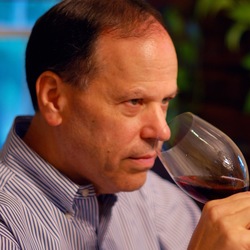
Second wine of Chateau Phelan Segur wine, deep Ruby red color, with aromas of ripe dark fruits, spice and floral herbs. On the palate flavors of blackberry, plum with cacao, toasty oak and cinnamon spice. Fine tannins, long finish ending with fruit, smoky spice, oak and earthy mineral character. — 7 months ago
Kelly Fleming Wines
Estate Grown Cabernet Sauvignon 2016
This was the WOFTN. Even better than the 03 Calon-Segur & 21 Lithology, but the Lithology had been open a week in the cooler. Still good just not its true self.
The winemakers for the 2016 Kelly Fleming Cabernet Sauvignon were Rebecca George and Françoise Peschon. Rebecca George was the day-to-day winemaker, and Françoise Peschon, consulting Winemaker.
Photo features their new consulting Winemaker, Jennifer Williams as if 7/23. — a year ago
Château Capbern
St. Estèphe Red Bordeaux Blend 2013

Dark red purple. Inviting nose of black berry and black currant. Echoed on the medium full palate with hints of graphite and patent leather. Medium non-assertive tannins most present on the back palate leads to the medium long finish. Medium acidity and silky oak makes this second label a nice entry point into Bordeaux for the New World enthusiast. Fine cuts of beef with Bordelaise is a natural of course. Drink now through 2028 while waiting for Calon-Segur to ripen. — 5 years ago

Château Palmer
Margaux Red Bordeaux Blend 1955
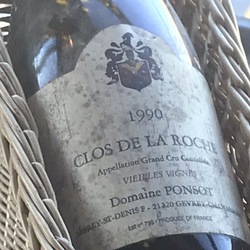

Tasted blind. Tawny color, translucent with amber rims. Notes of black cherry, cedar, some spice and a little barnyard floor. Sweet fruit in the mouth, with tannins fully resolved. Guessed 1955 Calon Segur. Perfect looking bottle, the cork revealed this bottle was reconditioned by the Chateau in 2000. — 8 years ago
Château Segur
Haut-Médoc Red Bordeaux Blend 2015

Classic Bordeaux — 8 years ago
Château Lafite Rothschild
Carruades de Lafite Pauillac Red Bordeaux Blend 2003
On the nose, ripe; blackberries, sweet & sour dark cherries, cooked cherries & strawberries & hues of blueberries. Black tea, cola, soft baking spices; vanilla, light clove & cinnamon. Crushed rocks, stones, limestone, turned, moist black earth, tobacco leaf, saddle-wood, soft leather, dry & fresh dark red florals.
The body is medium edging toward full. The tannins pretty well resolved. The ripe fruits show the hot, ripe vintage. Blackberries, sweet & sour dark cherries, cooked cherries & strawberries & hues of blueberries black tea, cola, soft baking spices; vanilla, light clove & cinnamon. Crushed rocks, stones, limestone, tobacco with ash, some graphite, soft medium dark spice, turned, forest floor, powdery but edgy minerals, saddle-wood, soft leather, dry & fresh dark red florals with some violets on the finish.
This showed better with Ribeye. The Ribeye brought out a fuller, richer wine with even more complexity. 9.35-9.4 with the Ribeye. It just missed 9.2 on its own. It’s big brother the 03 “Lafite” is 💯 point Parker wine.
Photos of; Chateau Lafite, their oak vat fermenters, Estate wine and their magnificent barrel room.
Interesting history and producers notes...Lafite Rothschild has a long and interesting history dating back to 1234, even though the property was not in the Bordeaux wine business at that time.
It is has been largely believed that vines were already planted on their terroir. The owner of the estate at the time, Gombaud de Lafite left his mark, his name. Almost 1,000 years after he owned it, the Chateau is still named after him! The vines were probably in existence at Lafite for over a century, it was not until around 1680, the majority of vineyards of what we know of as Lafite Rothschild today were created. This is because on the 1680 estate manifest, there are six mentions of their Bordeaux vineyards. Jacques de Segur, earns credit for cultivating the vineyard as I wrote in my Colon Segur post last weekend. In 1695, Alexandre de Segur married Marie-Therese de Clauzel, heiress to Chateau Latour. So to dovetail that write up, within a generation, the Segur family married into two of the greatest Bordeaux vineyards, Chateau Lafite and Chateau Latour! When their son, Nicolas-Alexandre passed away, Chateau Lafite and Chateau Latour were separated.
In 1797, Chateau Lafite was sold again. In the deed of sale, Chateau Lafite was described as a Premier Cru of Medoc. This is one of the earliest mentions of what we know of today as Lafite Rothschild producing wines of what would later be classified as an 1855 First Growth.
At that time, of Lafite were managed by the Goudal family. The Goudal family were wine historians and were able to read accurate records and details of the viticulture and marketing plans for Chateau Lafite in the estates formative years. The Goudal family gets the credit for creating the cellar and saving many of the oldest bottles that remain in the cold, dark cellars, including their oldest bottle, the 1797 Lafite!
The start of the famous Rothschild family begins in 1744, with the birth of Amschel Meyer. Amschel Meyer began creating his fortune while working as a merchant at “Zum Roten Schild,” which eventually became the family name of Rothschild.
In 1798 his sons were sent to various cities to create their fortunes. Needless to say, his sons all prospered as did their children in turn. This eventually led to them wanting to own a Chateau in Bordeaux. So in 1853, Baron Nathaniel de Rothschild, an English member of the Rothschild family, purchased Chateau Brane-Mouton. As was the custom of the day, the new owner renamed it using his name and Chateau Mouton Rothschild was born.
This was followed in 1868, when James Rothschild, another member of the family purchased Chateau Lafite, which was now a coveted First Growth.
On 8 August, 1868, Baron James d’Rothschild purchased Chateau Lafite, which was sold at a public auction in Paris. It’s assumed, he bought the property for family competitive reasons looking to one up his brother, the owner of Mouton Rothschild. At that time, Mouton Rothschild was only a Second Growth at the time. But, that does not paint the entire picture. The 1855 Classification had not taken on the importance associated with it the we see it today. Plus, buying Lafite was a reasonable investment as the vineyard sold for about 8 times its earning potential.
The actual Chateau is one of the older structures in Bordeaux, as part of the building dates back to the later part of the 16th century. In 1868, the vineyard took up 135 hectares, of which 74 hectares were cultivated with vines. Production was much smaller in those days than it is today as it was between 4,000 and 5,000 cases.
Just three months after the purchase, Baron James d’Rothschild passed away and Chateau Lafite Rothschild became the joint property of his three sons; Alphonse Rothschild, Gustave Rothschild & Edmond Rothschild. Since 1868, Chateau Lafite Rothschild has remained in the hands of the of Rothschild family. The new owners renamed the estate Chateau Lafite Rothschild.
Jumping ahead to the modern age, in 1962, the Rothschild family added to their holdings when they purchased Chateau Duhart-Milon, a Fourth Growth vineyard also located in Pauillac. It was owned by the Casteja family for more than a century, Chateau Duhart Milon suffered from neglect and was in a awful condition. By the time Duhart Milon was obtained by the Rothschild family, the vineyard was down to only 17 hectare which required extensive renovations.
Baron Eric Rothschild, nephew of Baron Elie Rothschild, took over the management of Lafite Rothschild in 1974. Baron Eric Rothschild was part of the fifth Rothschild generation to inherit Chateau Lafite Rothschild. In 1984, the Rothschild family added to their holdings in Bordeaux with the purchase of Chateau Rieussec in Sauternes.
1987 was a difficult vintage, but because that was the year Lafite celebrated the inauguration of their wine new cellar, they had a lot to be excited about.
The new cellars were built under the supervision of Catalan architect Ricartdo Bofill, is both underground and circular, with a vault supported by 16 columns, giving the structure a majestic architectural style. The cellar holds 2,200 barrels, which is about 55,000 cases of wine. The construction took two years to finish and was completed in 1988.
Domaines Baron Rothschild became one of the first Bordeaux properties to invest in South America when they purchased Vina Los Vascos from a Chilean family. The owners of Lafite Rothschild continued expanding their holdings with the purchase of Chateau lEvangile in Pomerol from the Ducasse family, who owned the property for almost 100 years.
The wine making at Chateau Lafite Rothschild was managed by Charles Chevallier, who began his position in 1994. Charles Chevallier was replaced by Eric Kohler in January 2016. 2017 saw another change at the estate when Jean Guillaume Prats replaced Christopher Salin as the President of Domaines Baron Rothschild.
Perhaps, it’s the most refined of the First Growth. The wine, like all First Growth’s takes decades to mature. It has remarkable staying powers. Bottles of 1870 Lafite Rothschild discovered in the Glamis castle remain profound at more than 140 years of age! It is consider by many Master Sommeliers to be the best wine in the world.
Chateau Lafite Rothschild is one of the earliest major Bordeaux estates to bottle their own wine. In 1890, they bottled a large portion of the wine and again in 1906. Part of the estate bottling was due to requests from Negociants who were willing to pay more for Chateau bottled wines. Also, bottling was primarily done to combat piracy. At the time, it was known that merchants in some countries, like Russia were bottling cheap wine and placing labels from Lafite Rothschild on the bottles. The Koch’s famous Jefferson bottles were not the first attempt at counterfeiting.
Prior to 1996, some would say the property had its share of ups and downs. The 1960’s and 1970’s were not great for Chateau Lafite Rothschild. But since 1996, Lafite Rothschild has been producing some of the best wine in their history!
Sadly, only the wealthy can afford to purchase it. Price aside, there is no denying the level of quality. In 2003 Lafite Rothschild produced a wine that is possibly unequaled by the estate at any time in their long history. Hence, my purchase of their 03 second wine. 2009, 2010 and 2016 are not far behind.
Starting in about 2008, Lafite Rothschild became the most collectible wine from Bordeaux. Prices exploded due to demand from China as Chinese businessmen bought them as gifts or bribes depending on you look at it.
The reason this started was Lafite Rothschild paid for product placement on the number one rated Chinese soap opera on television. Characters in that show were pictured enjoying life with Lafite Rothschild and since then demand went through the roof as did priced.
However, Issac Newton had it right when he declared “What goes up, must come down.” Prices for Lafite Rothschild plummeted after 2011. By the difficult 2013, prices were finally starting to hold firm, but many of the vintages that were setting price records on a daily basis had lost close to 50% of their value.
Starting with the 2012 vintage, Chateau Lafite Rothschild began instituting anti-counterfeiting measures. From 2012 forward, to help fight, rampant counterfeiting, the estate places a seal of authenticity on the capsules of both Lafite Rothschild and Carruades de Lafite. The seal features a unique, numbered code that can be checked on their website, to verify if the wine is real.
The 112 hectare vineyard of Chateau Lafite Rothschild is planted to 70% Cabernet Sauvignon, 25% Merlot, 3% Cabernet Franc and 2% Petit Verdot. This shows a slight change in the vineyard.
While Cabernet Sauvignon remained at 70%, today there is slightly more Merlot, less Cabernet Franc and the Petit Verdot has been added since the mid 1990’s.
Located in the far north of the Pauillac appellation, only the small, Jalle de Breuil stream separates the vineyards from St. Estephe. You could divide the vineyards of Chateau Lafite Rothschild into three sections with 100 separate parcels in all. The estate has close to 50 hectares of vines located close to the Chateau, on both sides of the D2, which offers gentle rises in elevations of up to 27 meters. They also have about 50 hectares vines planted on the plateau in the Carruades sector, where they have two blocks of vines, one of which is inside the vineyard of Chateau Mouton Rothschild. It is interesting to note that even though the parcels in the Carruades sector give their name to the second wine of the estate, those vines are almost always placed in the Grand Vin.
There are also vines adjacent to, and interspersed with the vineyards of Chateau Duhart Milon. The property also consists of a smaller, 4.5 hectare parcel of vines located in the Saint Estephe appellation, “La Caillava”. The vines in St. Estephe are situated not that far from Cos d Estournel, which are located on a larger a parcel known as Blanquet. The vines in Saint Estephe are allowed to be placed into the wine of Chateau Lafite Rothschild because those vines were used to produce Lafite in 1885, at the time of the classification. The vineyards are close to their famous neighbor Mouton Rothschild.
Located just south of the Chateau, the best terroir of Lafite Rothschild has a thick layer of gravel with sand, clay, marl and limestone in the soils with rolling, gravel slopes. The gravel can be as deep as 4 meters in some parcels.
It is important to note that even though their vineyards are in the far north of Pauillac, most of the soil is pure gravel, rocks and stones. With more than 50% of the soil consisting of gravel, that is a large part of the reason Lafite Rothschild has such elegant, feminine textures and that coveted sensation of minerality.
On average, the vines are close to 40 years of age. However, Chateau Lafite Rothschild has much older vines. In fact, they have some vines that are more than 100 years of age planted in the La Graviere section. That small parcel of Merlot vines dates back to 1886. Less than 1% of the vines are that old.
Additionally, they have a small section of Cabernet Sauvignon that dates back to 1922! Other old vines range from 50 to 90 years of age! They also maintain some of the oldest Petit Verdot vines in the Medoc that was planted in the early 1930’s.
At Chateau Lafite Rothschild, between 1% to 1.5% of the vineyard is replanted every year. Vines less than 20 years of age are never included in the Grand Vin.
The vineyard of Chateau Lafite Rothschild is planted to a vine density that ranges from 7,500 to 8,500 vines per hectare. Only organic fertilizers are used in the vineyards of Lafite Rothschild.
During harvest, the goal is not to pick at the maximum level of ripeness. Instead, they are seeking a blend of grapes at differing levels of maturity, which gives the wine its unique textures, freshness, aromatic complexities and elegant sensations.
Lafite Rothschild is the largest of the First Growth vineyards with close to 112 hectares of vines. A large portion of the estate is taken up with stunningly, beautiful landscaping, lakes, trees and parkland.
At one point in time, Chateau Lafite Rothschild produced a dry white, Bordeaux wine that was sold as Vin de Chateau Lafite. The wine was produced from a large percentage of Semillon, blended with a small amount of Sauvignon Blanc. The last vintage for their white wine was 1960. The wine was sold as a generic AOC Bordeaux blanc with a simple, scripted label, black and white label.
Lafite vinification takes place in 66 vats that are a combination of 29 wood vats, 20 stainless steel tanks and 17 concrete vats that range in size from as small as 45 hectoliters up to 123 hectoliters in the concrete and as large as 270 hectoliters for the wood. The wide range of vat sizes coupled with different materials allow Chateau Lafite Rothschild to vinify depending on the needs of each specific parcel and grape variety. The stainless steel tanks and oak vats are used for Cabernet Sauvignon. The Merlot is vinified in the concrete tanks. Malolactic fermentation occurs in smaller, stainless steel tanks that vary in size from 25 hectoliters up to 60 hectoliters. At this point, Chateau Lafite Rothschild does not yet use gravity to move the fruit and juice in the cellar. It’s a good bet that a remodel is coming soon.
The average annual production of Chateau Lafite Rothschild ranges from 15,000 to 20,000 cases of wine per year, depending on the vintage. They of course make this second wine, Carruades de Lafite, which due to the name and association with the Grand Cru, has also become extremely collectible. Carruades de Lafite takes its name from a specific section of their vineyard that is located near Mouton Rothschild. Carruades is actually one of the older second wines in Bordeaux, as it was first produced in the mid 1850’s. About 100 years later during the mid 1960s, the estate reintroduced their second wine naming it Moulin de Carruades. The name was changed again in the 1980’s to Carruades de Lafite.
There is also a third wine which is sold as an AOC Pauillac that is produced from declassified fruit from Lafite Rothschild and Duhart-Milon.
The blend for Chateau Lafite Rothschild changes with each vintage depending on the character and quality of the vintage. Generally speaking, the amount of Cabernet Sauvignon in the blend ranges from 80% to 95%. Merlot is usually 5% to 20%. Cabernet Franc and Petit Verdot usually varies from 0 to 5%.
— 8 years ago


Château Calon-Ségur
Saint-Estèphe Red Bordeaux Blend 1982
I haven’t had a Bordeaux in a while. Especially, with a Ribcap. So, why not an 82? The vintage Robert Parker made his career as the only critic who called it correctly.
Very good 80’s Bordeaux were my first true wine love. Their style & 12-13% ABV will always be my cherished infatuation. Wished it had never changed.
Bought this Calon Segur on the secondary market several yrs ago. Tricky cork. Used my Durand. All good. Fill line perfect, no bottle neck tannin burn but plenty of velvety sediment.
If any of you ever wondered why there is a heart on the label. Here is the interesting reason…
It symbolizes the estate's deep-rooted history and the affection of its former owner, the Marquis de Ségur. Despite owning prestigious estates like Château Lafite and Château Latour, he famously declared, "I make wine at Lafite and Latour, but my heart is at Calon." His sentiment is immortalized by the heart emblem on the label.
Opened it and let it breathe from the bottle for 45 minutes. Tasted it and decanting it in stages. Then, stopped 1/2 way through and poured the bottom half of the bottle from the bottle.
82 is such a grand, classic vintage. For the most part, I drink Calon Segur’s too early, even at 20 yrs of age. I don’t want to say it is a long in tooth as its neighbor, Montrose, but it is close. This 82 is drinking perfectly w/ 41 yrs in bottle and will hold another 5 yrs. Such soft, perfectly darkish spices with elegantly ripe fruits.
This 82 glides over the palate. There is only beautiful elegance, nothing bites back. The fruits are older (not old or past their prime), ripe fruits of; blackberries, dark cherries, both plums but lean plum vs black, dark cherries, crazy, outstanding, hoovering raspberries with notes of blueberries & shades of freshly picked rhubarb. Some black cherry cola, anise to understated black licorice, dark chocolate pudding, caramel, layered, gentle baking spices-nutmeg, clove, cinnamon & vanillin, touch of sun tea, old leather, dryish to fresh tobacco w/ash, charcoal, elegant graphite, dry limestone powder, dry river pebbles, black, rich earth w/ dry leaves, magical, dark spices, grey volcanics, dry stems, just a hint of dry herbs, dry top soil, fresh & withering dark, red flowers, red roses, grand acidity with perfect; balance, tension, structure and a grand, gentle finish that goes on & on and eventually lands on an amazing soft buffet of earthiness.
This is a wine that is technically a 94, but w/ evolution & style a 97. Amazing bottle that you don’t want to end.
$500 a bottle today through the app. Somewhere around $10 upon release. — 9 months ago
Château Phélan Ségur
Le Rosé de Phélan Segur Bordeaux Rosé 2003

Amazing wine — 7 years ago
Château Phélan Ségur
Saint-Estèphe Red Bordeaux Blend 2008
In 1805, Daniel Phelan, an Irish wine broker, acquired le Clos de Garamey, and was followed in 1810 by the acquisition of the Segur de Cabanac estate, creating the domain that remains today. Initial Aromas of leather, oak and earthiness hit about, medium(+), bringing in subtle flavors of blackberry and herb. On the palate subtle fruit flavors of blackberry, herb, leather, smoky oak and meatiness carry from the nose. Medium(+) acidity on firm medium(+) tannins of this full body wine carry the flavors to a medium(+) length finish. Very good, but undelivered a bit, drink now will not get better. — 7 years ago
Château Duhart Milon
Pauillac Cabernet Sauvignon - Merlot Blend 2006
The 06 vintage was more highly praised by the Bordelais than it delivered. That’s not to say, some producers didn’t deliver.
This 06 is not at its peak...still needs a few years. Will it be a wine that blows you away? Not likely but, it will deliver nice fruit, earth & balance. Especially, with a Ribeye.
The nose shows; ripe; blackberries, dark cherries, black raspberries, baked strawberries, dry cranberries & some black plum. Saddle-wood, limestone minerals, dry stones, cinnamon, soft spice, light vanilla, black rich earth, touch of black licorice and red & dark fresh florals.
The body is round and a little lean but puts on weight with food and decanting. The structure, length & tension are falling into place. The fruits are ripe and expressive. Blackberries, dark cherries, black raspberries, baked strawberries, haunting blue fruits, dry cranberries & some black plum. Saddle-wood, touch herbaceous, mint, limestone minerals, dry clay, dry stones, cinnamon, soft spice, cola, light vanilla, black rich earth, touch of black licorice and red & dark fresh florals. The acidity is round and beautiful. The finish is on the leaner side but, well balanced and lasts a full minute. 9.1 without the Ribeye, 9.2 with it.
Photos of, Duhart Milon, Cabernet ready to to be pressed, wine making facilities and their barrel room.
Producer history and notes...the Rothschild family is divided into two sects for lack of a better word. There are the ones that own Mouton Rothschild and Cleric Milon etc. and the other owns Lafite and Duhart. The two sides of the families don’t necessarily get along. However, they are two of the oldest/wealthiest families in recorded history.
Duhart Milon was originally known only as Chateau Milon. At one time the estate was the second wine of Chateau Lafite.
The story about how this came to be is interesting. The owner of Lafite at that time was the Marquis Nicolas-Alexandre de Segur. King Louis XV called him “The Wine Prince” because of his extensive vineyard holdings in Bordeaux. The Milon vineyards were well regarded but, not as good as Lafite, which is how the wine came to be thought of as the second wine for Lafite.
In 1815, the property was considered by some people as a fourth growth Bordeaux wine in the making. In those days, the wine was sold under the name of Chateau Mandavy-Milon. Between 1830 and 1840, the Casteja family inherited the estate.
The label of Duhart Milon, according to family tradition came about from an old legend written about one of their ancestors, Sir Duhart. Sir Duhart, was rumored to have been a pirate for Louis XV. He retired in Pauillac. The “Pirate’s House” on the Pauillac port existed up to the 1950’s. That original building inspired the label for the Duhart-Milon wines.
The Casteja family remained in possession of Duhart Milon until the first part of the 20th century. At the time, Chateau Duhart Milon was one of larger Pauillac estates with around 50 hectares of vines.
In 1937, the result of successive inheritances led to the sale of Duhart Milon. The Left Bank property went through five different owners in just 25 years. As well, the vineyards were split up and with the frost of 1956, the quality of Duhart Milon continued declining until the Rothschild family purchased the property in 1962.
At that time of the sale, Chateau Duhart Milon included 110 hectares of land, of which only 17 hectares were planted with vines. The entire vineyard was in desperate need of replanting. Major renovations were urgently needed in the vineyards, which demanded work on the drainage and replanting.
The size of their vineyards were also increased with the purchase of other parcels adding to the size of their Medoc holdings. New cellars needed to be built as well.
Chateau Duhart Milon remains one of the few 1855 Classified Growth estates without an actual Chateau. At Duhart, all you will find are the cellars, vatting rooms and barrel storages.
During the period of 1970 to 2000, the vineyards nearly doubled in size! Additionally, they constructed new cellars, renovated and modernized their wine making facilities as well in 2003. By 2008, the wine of Duhart Milon increased in quality, stature and price.
Much of the price increase had to do with the association with Chateau Lafite Rothschild, which had by that time, become the most in-demand, collectible wine in China. By the time the 2015 vintage was offered, prices had dropped to a more affordable price level due to changes in Chinese laws regarding client gifts/bribes.
The 152 hectare vineyard of Chateau Duhart Milon includes; 76 hectares of vines planted to 67% Cabernet Sauvignon and 33% Merlot. This makes Chateau Duhart Milon one of the few 1855 Classified Growths with only two grape varieties planted in their vineyards.
The average age of the vines are 30 years old. The vineyard is planted to a vine density of 7,500 vines per hectare.
Duhart Milon vineyards are located in northern Pauillac, on the western side of Chateau Lafite Rothschild, on the Milon hillside, which is not far from the Carruades plateau...now Lafite’s second wine. This places the vineyard quite close to Chateau Mouton Rothschild and Chateau Clerc Milon. However, because of micro climates, this is a slightly cooler terroir, due to its northern exposure.
The naturally cooler soils provides more freshness to the wine, and allows for later picking. The terroir of Chateau Duhart Milon is a combination of gravel, sand and limestone soils. The Duhart Milon vineyards are unique in Pauillac, as the vines are for the most part, located in 1 single, large parcel.
The vinification of Chateau Duhart Milon takes place in temperature controlled stainless vats. Malolactic fermentation takes place in vat. Chateau Duhart Milon is then aged in an average of 50% new French oak barrels for 14 to 16 months, depending on the vintage.
There is a second wine, Moulin de Duhart, that was created in 1986. There is also a third wine produced by the estate, Baron de Milon. — 8 years ago
Paul T, Missing My Beautiful Wife 24/7
I only drink wines that taste like Patent leather, soft leather is for sissy’s,😬
Stefan Dolhain
2021 vintage. Le C de Calon Ségur is the third wine. Good, but somewhat pretentiously priced ( at the price level of Cantemerle), and suffering from the comparison with Château d'Arcins and Château Barreyres 2022 at half the price. Abv. 13%. Also, I'd rather pay 10 euro more for the Marquis de Calon. — 20 days ago